




Phú Quốc Island — Tropical Wellness & Extended-Stay Recovery in Vietnam
Discover Vietnam’s Pearl Island, where tropical beaches, peaceful surroundings, luxury accommodation and access to healthcare create an attractive destination for wellness holidays and carefully planned extended stays.
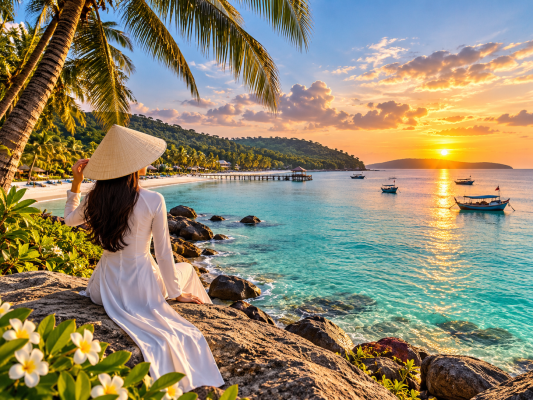
Situated in the Gulf of Thailand, Phú Quốc is Vietnam’s largest island and one of the country’s most appealing coastal destinations. Its white-sand beaches, turquoise waters, tropical forests and traditional fishing communities offer visitors an opportunity to experience a quieter side of Vietnam.
Known as the Pearl Island, Phú Quốc combines international resorts with local culture, natural landscapes and a growing range of visitor services.
For international patients and accompanying family members, the island may also be considered for relaxation or an extended stay before or after medical treatment elsewhere in Vietnam, provided that travel and activities are approved by the treating clinician.
Why Choose Phú Quốc for Wellness and Extended Stays?
Phú Quốc offers a distinctive combination of tropical scenery, accommodation choices and opportunities for relaxation.
Visitors can enjoy peaceful beachfront settings, gentle coastal walks, spa experiences, fresh seafood and excursions into the island’s natural environment.
Unlike Vietnam’s major medical centres, Phú Quốc is primarily a leisure and wellness destination. Its appeal for medical travellers lies in the possibility of combining appropriate healthcare access with a comfortable island stay.
For those considering a longer visit, accommodation ranges from private villas and international resorts to smaller hotels and serviced residences.
Healthcare Access on Phú Quốc
Access to appropriate medical care is an important consideration when planning an extended stay.
Vinmec Phú Quốc International General Hospital provides medical services on the island, including consultations, diagnostic imaging, emergency care and a range of specialist services.
The hospital also describes arrangements for specialist consultation and medical transportation when more advanced care is required.
However, patients considering complex surgery, specialised cancer treatment or other major procedures should first establish whether the necessary expertise and facilities are available locally or whether treatment would be more appropriate in a larger Vietnamese medical centre.
For those receiving treatment in Ho Chi Minh City, a subsequent stay on Phú Quốc may be an option after medical clearance and with suitable follow-up arrangements.
Medical Tourism Vietnam encourages patients to prioritise clinical suitability, provider qualifications, continuity of care and clear arrangements for any medical needs during their stay.
Beaches and Coastal Relaxation
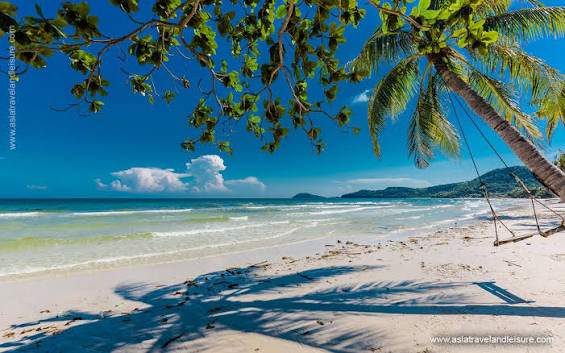
Phú Quốc’s beaches are among its principal attractions.
Long Beach (Bãi Trường) is well known for its west-facing coastline, accommodation and sunset views. It is particularly attractive to visitors who prefer convenient access to restaurants and services.
Sao Beach (Bãi Sao) is celebrated for its pale sand and turquoise water, making it a popular choice for a relaxed beach outing.
Gành Dầu, in the island’s north, offers a different atmosphere, with coastal scenery and access to quieter surroundings.
The official Vietnam Tourism guide to Phú Quốc provides additional information on beaches, seasonal conditions and visitor experiences.
Patients recovering from treatment should avoid swimming, strenuous activity, prolonged sun exposure or water sports unless specifically cleared by their medical team.
Phú Quốc National Park and Natural Heritage
Beyond the coastline, Phú Quốc is home to extensive tropical forests and protected natural environments.
The island forms part of the UNESCO-recognised Kiên Giang Biosphere Reserve, reflecting the ecological importance of the surrounding landscapes and marine ecosystems.
Visitors interested in nature may explore accessible areas of Phú Quốc National Park, enjoy scenic drives or discover forested surroundings away from the main resort districts.
The Vietnam Tourism nature guide introduces the island’s forests, wildlife, walking routes and coastal ecosystems.
For visitors seeking relaxation rather than adventure, simply spending time in a peaceful natural setting can be one of the island’s most enjoyable experiences.
Discovering Traditional Island Life
Phú Quốc’s identity extends well beyond tourism.
Fishing communities, pepper cultivation and traditional fish sauce production remain important parts of its cultural heritage.
Visitors can discover:
- Hàm Ninh Fishing Village, associated with traditional coastal life and local seafood.
- Dương Đông Night Market, where food stalls and local vendors create a lively evening atmosphere.
- Fish sauce producers, whose traditional methods have contributed to the island’s culinary reputation.
- Pepper farms, where visitors can learn about one of Phú Quốc’s best-known agricultural products.
- Dinh Cậu, a coastal spiritual landmark associated with local fishing traditions.
These experiences offer an opportunity to understand the island’s people and heritage, rather than seeing Phú Quốc solely as a beach resort.
Explore more through Vietnam Tourism’s guide to Phú Quốc’s natural and cultural attractions.
Island Excursions and the An Thới Archipelago
South of Phú Quốc lies the An Thới Archipelago, a group of smaller islands known for coastal scenery and marine activities.
Visitors can enjoy sightseeing cruises, island excursions and views across the surrounding waters.
The Hòn Thơm cable car offers a memorable perspective over the sea and neighbouring islands.
For patients and older travellers, the suitability of boat trips, cable car journeys and other excursions should be considered individually, taking into account mobility, weather conditions and medical advice.
A quiet coastal excursion may be preferable to strenuous water-based activities during an extended recovery stay.
Accommodation, Resorts and Wellness Experiences
Phú Quốc has developed a broad selection of international-standard resorts, beachfront hotels, private villas and smaller accommodation properties.
Some offer spa treatments, swimming pools, wellness programmes, restaurants and private beach access.
For visitors planning an extended stay, practical considerations are just as important as attractive surroundings.
Accommodation should be assessed for accessibility, proximity to medical facilities, transport arrangements, dietary requirements, lift access and the availability of assistance if needed.
Spa treatments and massage should not be assumed suitable following surgery or medical procedures. Patients should obtain approval from their treating clinician before booking such services.
The objective is to create a comfortable, well-organised stay rather than to suggest that resort amenities themselves provide medical treatment.
Getting to Phú Quốc
Phú Quốc International Airport connects the island with major Vietnamese cities and selected international destinations.
Travellers may also reach the island by ferry from mainland ports such as Hà Tiên and Rạch Giá.
The Vietnam Tourism destination guide provides an introduction to transport options and seasonal travel conditions.
The dry season, generally from November to April, is popular for beach holidays, while the wetter months can bring heavier rainfall and rougher seas.
Patients travelling after surgery or other medical treatment should confirm their fitness to fly or travel by ferry, including any restrictions related to mobility, wound healing, thrombosis risk or ongoing treatment.
Planning an Extended Stay After Medical Treatment
Phú Quốc may appeal to international visitors who wish to spend additional time in Vietnam after completing an appropriate stage of medical treatment.
However, a pleasant destination is not automatically a suitable recovery destination for every patient.
Before arranging travel, patients should establish:
- Whether their treating clinician has approved the journey.
- Whether necessary follow-up appointments have been completed or arranged.
- Whether appropriate medical support is accessible on the island.
- Whether the accommodation is suitable for their mobility and care requirements.
- Whether emergency transfer arrangements are understood.
- Whether their travel insurance covers the intended activities and relevant medical circumstances.
For assistance with treatment planning, provider enquiries and coordination, see our International Patient Process & Support Services information.
Explore Phú Quốc with Medical Tourism Vietnam
Medical Tourism Vietnam helps international patients research healthcare options and consider the practical arrangements surrounding treatment in Vietnam.
Our approach places emphasis on transparent information, appropriate provider selection, clear communication and continuity of care.
Phú Quốc offers an appealing environment for leisure, wellness and extended stays, but any recovery-related visit should be planned around the individual’s medical needs.
Whether you are considering a wellness holiday, travelling with a family member receiving treatment or exploring an extended stay after medical care, careful planning is essential.
Contact Medical Tourism Vietnam to discuss your requirements and the information you need before making arrangements.
Medical Tourism Vietnam provides information and coordination support. We do not diagnose medical conditions, prescribe treatment or guarantee clinical outcomes. Medical decisions should always be made with appropriately qualified healthcare professionals.
Phú Quốc — History, Legends and Island Heritage
Beyond its tropical beaches and luxury resorts, Phú Quốc possesses a fascinating cultural heritage shaped by early settlement, maritime traditions, royal history and the struggles of the Vietnamese people.
Dinh Cậu — The Legend of the Fishermen’s Guardian
Overlooking the sea near Dương Đông, Dinh Cậu is one of Phú Quốc’s most recognisable spiritual landmarks.
According to local folklore, fishermen caught in violent storms were protected by sacred forces associated with a rocky outcrop beside the coast. The community subsequently established a shrine where generations of fishing families have offered prayers for protection and safe passage.
Today, Dinh Cậu remains an important expression of the island’s relationship with the sea.
Visitors can learn more about the shrine through the Phú Quốc tourism authority’s guide to Dinh Cậu.
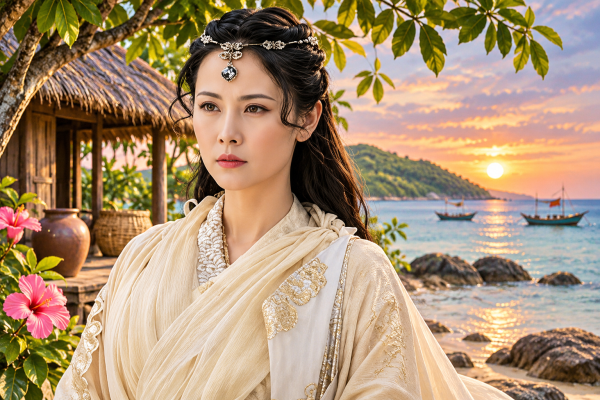
Bà Kim Giao — A Woman Remembered in Island Folklore
One of Phú Quốc’s lesser-known legends concerns Bà Kim Giao, a woman traditionally associated with the island’s early agricultural settlement.
Local stories describe her as a woman of Cambodian royal ancestry who established a settlement and cultivated land on the island. Some versions also connect her with Nguyễn Ánh, the future Emperor Gia Long, during his years of political and military struggle.
These accounts form part of Phú Quốc’s oral traditions and illustrate the island’s historical connections with mainland Vietnam and neighbouring Cambodia.
The story of Bà Kim Giao remains an intriguing part of Phú Quốc’s cultural heritage, connecting the island’s early settlement traditions with Cambodian folklore and the history of Nguyễn Ánh, the future Emperor Gia Long.
Discover the full story in our Hanoi Trading Post feature: Bà Kim Giao — The Forgotten Woman of Phú Quốc.
Nguyễn Trung Trực and the Island’s Resistance History
Phú Quốc also preserves memories of Nguyễn Trung Trực, the nineteenth-century Vietnamese resistance leader who opposed French colonial expansion.
A temple at Gành Dầu commemorates his life and sacrifice, providing visitors with an opportunity to explore an important chapter in southern Vietnam’s history.
Phú Quốc Prison — Remembering the Past
The island’s history also includes the sombre legacy of Phú Quốc Prison, also known as Cây Dừa Prison.
Established during the French colonial period and subsequently expanded during the Vietnam War, the prison became associated with harsh conditions, imprisonment and the suffering of thousands of detainees.
Today, the preserved site serves as a place of historical remembrance and education.
Visitors interested in understanding this period can consult the Vietnam National Authority of Tourism’s account of Phú Quốc Prison.
Together, these landmarks and legends reveal an island whose identity extends far beyond its reputation as a tropical holiday destination.