





Mental Health Support in Vietnam
Mental health is an important part of overall health. People may seek professional support because of anxiety, depression, stress, relationship difficulties, bereavement, major life changes or simply because they feel they are no longer coping as well as they normally would.
For international residents and visitors, living or working away from familiar support networks can create additional challenges. Language, cultural adjustment, employment pressures, relationships, isolation and changes in lifestyle may all affect emotional wellbeing.
Vietnam has a developing range of mental-health services, including psychologists, counsellors, psychiatrists and other qualified professionals.
Medical Tourism Vietnam provides general information to help international patients understand these different forms of support and identify appropriate professional care.
Understanding Different Types of Mental Health Support
Mental-health services are not interchangeable.
The appropriate professional depends upon the person’s circumstances, symptoms and the type of assistance required.
Psychology
Psychologists are trained to assess psychological and emotional difficulties and may use evidence-based psychological therapies to help people manage conditions such as anxiety, depression, trauma, stress and behavioural or relationship difficulties.
The qualifications, professional registration and scope of practice of individual psychologists should always be checked.
Explore Psychology Services in Vietnam →
Link this to the existing Psychologist child page.
Counselling
Counselling can provide a confidential environment in which people discuss personal, emotional, relationship or adjustment difficulties.
People may seek counselling during periods of stress, bereavement, relationship problems, career changes, relocation or other challenging life circumstances.
The term counsellor can cover practitioners with different levels of education and professional training, making it particularly important to understand a practitioner’s qualifications and experience.
Explore Counselling in Vietnam →
Link this to the existing Counselling child page.
Coaching
Coaching is generally focused on personal development, goals, career direction, performance or lifestyle change.
It should not be confused with psychological or psychiatric treatment.
Someone experiencing significant depression, severe anxiety, trauma, suicidal thoughts or another mental-health condition may require assessment by an appropriately qualified mental-health professional rather than a coach.
Explore Coaching in Vietnam →
Link this to the existing Coaching child page.
Psychiatry and Medical Mental Health Care
Psychiatrists are medical doctors who specialise in mental health.
Psychiatric assessment may be appropriate where symptoms are severe, persistent or complex, where medication might be considered, or where there are concerns about a person’s safety or ability to function normally.
Treatment may involve medication, psychological therapy or a combination of approaches depending upon individual circumstances.
Medication should only be started, changed or discontinued following appropriate medical advice.
Anxiety, Depression and Emotional Distress
Anxiety and depression are common reasons people seek professional mental-health support.
Symptoms can vary considerably and may affect sleep, concentration, appetite, relationships, work and everyday activities.
Persistent emotional distress should not simply be attributed to stress or lifestyle without appropriate assessment.
Physical health conditions and medications can sometimes contribute to psychological symptoms, which is another reason professional assessment can be important.
Children, Adolescents and Academic Pressure in Vietnam
Mental health among children and adolescents deserves particular attention.
Young people may experience pressure associated with academic achievement, examinations, family expectations, relationships, bullying, social media and uncertainty about their future. While some degree of challenge is a normal part of growing up, sustained pressure can affect emotional wellbeing, relationships, sleep, concentration and a young person’s ability to cope.
In Vietnam, research has identified academic pressure and the school environment among factors that can affect adolescent mental health and wellbeing. UNICEF Vietnam has highlighted the importance of supportive families, safe schools, early recognition of psychological difficulties and access to appropriate mental-health and psychosocial support.
When Academic Achievement Becomes Pressure
Education is highly valued in Vietnamese society, and parents naturally want their children to succeed. Teachers likewise have responsibilities to encourage students to develop their abilities and achieve their potential.
However, academic expectations can become harmful when a young person feels that examination results, grades or entry to a particular school or university determine their personal worth or their family’s approval.
Serious emotional distress should never simply be dismissed as laziness, poor discipline, teenage behaviour or an unwillingness to study.
Changes such as persistent withdrawal, unusual anxiety, loss of interest in normal activities, significant changes in sleep or behaviour, expressions of hopelessness or difficulty functioning at school or home deserve attention.
No single behaviour necessarily indicates a mental-health condition. When there are concerns, appropriate professional assessment is preferable to attempting to diagnose a young person without specialist knowledge.
The Role of Parents and Teachers
Parents and teachers are often among the first people able to notice that something has changed.
Listening without immediately judging, punishing or dismissing a young person’s concerns can be an important first step. Children and adolescents need to know that asking for help will not automatically be regarded as weakness or failure.
Schools can also contribute by creating environments in which students feel safe discussing emotional difficulties and know where appropriate support can be found.
Teachers are not expected to become psychologists. Their role can instead include recognising when a student may be struggling, responding appropriately and helping connect the student with parents, school support services or qualified mental-health professionals when necessary.
Building a Culture Where Young People Can Ask for Help
Reducing stigma around mental health is particularly important for younger people.
Conversations about emotional wellbeing should not begin only after a crisis occurs. Families, schools and communities can help young people understand that psychological health deserves attention in the same way as physical health.
Medical Tourism Vietnam supports greater awareness of student mental health, responsible discussion of academic pressure and improved access to appropriately qualified psychological and mental-health support for children, adolescents and their families.
Further educational resources on student mental health and academic pressure in Vietnam will be developed in collaboration with Hanoi Trading Post.
Stress, Work and Expatriate Life
Living overseas can be rewarding, but international residents may encounter pressures that differ from those experienced at home.
These can include cultural adjustment, language barriers, demanding employment, relationship changes, social isolation and separation from family or established support networks.
Professional counselling or psychological support can sometimes help people understand these pressures and develop practical strategies for managing them.
Confidentiality and Communication
Feeling comfortable with a mental-health professional is particularly important.
International patients may wish to ask whether consultations are available in English or another preferred language and how confidentiality and patient records are managed.
Cultural understanding also matters.
Ideas surrounding family, relationships, work, emotional wellbeing and mental illness can differ considerably between cultures. An effective practitioner should be able to work respectfully with the patient’s individual and cultural circumstances.
Choosing a Mental Health Professional in Vietnam
Before arranging treatment, consider the practitioner’s professional qualifications, training, clinical experience and area of practice.
Patients may also wish to ask:
- What professional qualifications do you hold?
- What type of clients or conditions do you normally work with?
- What therapeutic approaches do you use?
- Are consultations available in English?
- How long does a typical consultation last?
- How is confidentiality managed?
- What happens if I require psychiatric or other specialist medical care?
- Can treatment continue online if I later leave Vietnam?
For more complex conditions, coordination between psychologists, psychiatrists and other healthcare professionals may be appropriate.
Online Mental Health Support
Telehealth has made psychological and counselling services more accessible for people who travel frequently or live outside major Vietnamese cities.
Online consultations may also allow continuity of care when an international resident leaves Vietnam.
However, telehealth is not appropriate for every situation, particularly where urgent assessment, physical examination or immediate intervention is required.
Wellness and Mental Wellbeing
Relaxation, exercise, mindfulness, meditation and other wellbeing practices may support general emotional wellbeing for some people.
They should not be presented as replacements for appropriate psychological or psychiatric treatment where a mental-health condition requires professional care.
Readers interested in complementary wellbeing approaches can explore our:
Traditional Vietnamese Approaches to Mental Wellbeing
Vietnam has long-standing traditions that consider wellbeing through the relationship between mind, body, breathing, movement and contemplative practice.
Meditation (thiền), mindful breathing and traditional mind-body practices continue to form part of Vietnam’s broader wellbeing landscape. For some people, these practices may provide opportunities for relaxation, reflection, greater self-awareness and support in managing everyday stress.
Traditional and contemplative approaches should, however, be distinguished from professional mental-health treatment. They may complement a broader approach to wellbeing but should not replace psychological, psychiatric or medical assessment when professional care is required.

Chân Khí Đạo: A Contemporary Vietnamese Approach to Mindfulness and Holistic Wellbeing
One contemporary Vietnamese approach explored by Medical Tourism Vietnam is Chân Khí Đạo, a mind-body practice incorporating meditation, breathing, movement and mindful awareness.
Medical Tourism Vietnam presents Chân Khí Đạo within the broader context of mindfulness, holistic wellbeing and Vietnamese approaches to mind-body health, rather than as a treatment for mental illness.
For people interested in complementary approaches to wellbeing, Chân Khí Đạo provides an opportunity to explore meditation, breathing and mindful movement as part of a broader approach to physical and emotional wellbeing.
Explore Chân Khí Đạo:
Chân Khí Đạo: A Contemporary Vietnamese Approach to Mindfulness and Holistic Wellbeing
Further Reading – Hanoi Trading Post:
Chân Khí Đạo: Bridging Ancient Meditation and Modern Science for Holistic Healing in Vietnam
Chân Khí Đạo và Sức Khỏe Tinh Thần
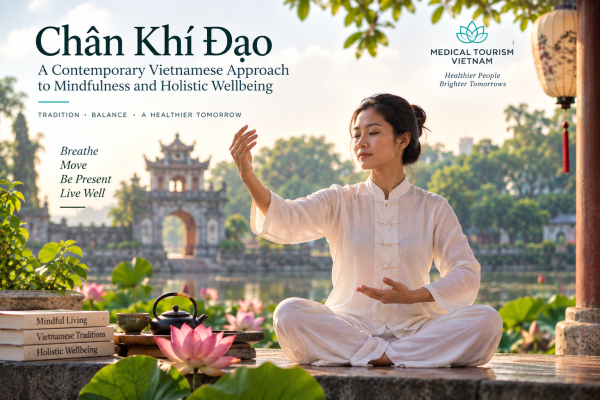
Chân Khí Đạo là một phương pháp thực hành thân–tâm đương đại của Việt Nam, kết hợp thiền, hơi thở, chuyển động và sự chú tâm.
Trong bối cảnh sức khỏe tinh thần, Chân Khí Đạo nên được xem như một phương pháp hỗ trợ sức khỏe toàn diện, giúp một số người tạo không gian để thư giãn, suy ngẫm, nâng cao nhận thức về bản thân và chú ý hơn đến mối liên hệ giữa cơ thể và tâm trí.
Các phương pháp như thiền, hít thở có ý thức và chuyển động nhẹ nhàng có thể trở thành một phần trong cách mỗi người chăm sóc sức khỏe và đối phó với những căng thẳng thường ngày.
Tuy nhiên, Chân Khí Đạo và các phương pháp thực hành thân–tâm khác không nên được xem là phương pháp thay thế cho việc đánh giá hoặc điều trị chuyên môn về sức khỏe tinh thần.
Khi một người gặp phải tình trạng trầm cảm kéo dài, lo âu nghiêm trọng, sang chấn tâm lý, ý nghĩ tự làm hại bản thân hoặc những khó khăn ảnh hưởng đáng kể đến cuộc sống hằng ngày, họ nên tìm kiếm sự hỗ trợ từ chuyên gia tâm lý, bác sĩ tâm thần hoặc nhân viên y tế có chuyên môn phù hợp.
Tìm hiểu thêm về Chân Khí Đạo:
Chân Khí Đạo: A Contemporary Vietnamese Approach to Mindfulness and Holistic Wellbeing
Bài đọc thêm – Hanoi Trading Post:
Chân Khí Đạo: Bridging Ancient Meditation and Modern Science for Holistic Healing in Vietnam
Wellness & Recovery in Vietnam
https://medicaltourismvietnam.com/procedures/health-spa/
When Urgent Help Is Needed
Mental-health emergencies require a different response from routine counselling or wellness support.
Someone who may be at immediate risk of harming themselves or another person, is experiencing severe psychological distress, significant confusion, psychosis or another acute mental-health crisis should seek urgent local medical assistance or emergency care rather than relying upon an online enquiry or routine appointment.
Medical Tourism Vietnam is an information and patient-support platform and does not provide emergency mental-health services.
Mental Health Support for International Patients
Finding an appropriate professional can sometimes be difficult when living in another country.
Medical Tourism Vietnam can help international patients explore available healthcare options and make initial enquiries where appropriate.
Final diagnosis and treatment recommendations remain the responsibility of appropriately qualified healthcare professionals.
Explore Mental Health Services
Use the existing child pages here:
Psychologist → existing Psychologist page
Counselling → existing Counselling page
Coaching → existing Coaching page
We will inspect and rebuild each of these pages individually after completing this hub.
Continue Exploring Medical Procedures in Vietnam
Explore the main Medical Tourism Vietnam procedures guide:
https://medicaltourismvietnam.com/procedures/
Further Reading – Hanoi Trading Post
Hanoi Trading Post explores Vietnamese society, culture and contemporary life, providing additional context for international residents and visitors.
We do not currently have a sufficiently relevant HTP mental-health feature to justify forcing an unrelated article into this page.
Looking for Mental Health Support in Vietnam?
If you are looking for a psychologist, counsellor or other mental-health professional in Vietnam, Medical Tourism Vietnam can help you explore appropriate options.
Contact Medical Tourism Vietnam
https://medicaltourismvietnam.com/contact-us/
There is no obligation to proceed. Final suitability, diagnosis and treatment recommendations are determined by the treating healthcare professional following individual assessment.
Medical Disclaimer
This page provides general educational information and is not a substitute for professional medical or psychological advice, diagnosis or treatment. Anyone experiencing a mental-health emergency should seek urgent assistance from an appropriate local healthcare or emergency service.
About the Author
George Adams is the Founder and Editor of Medical Tourism Vietnam, an independent information platform supporting international patients exploring healthcare, medical travel and wellness options in Vietnam and Asia.
Editorial Policy
Medical Tourism Vietnam aims to provide patient-first, evidence-informed healthcare information. Healthcare professionals and providers may be featured for informational purposes, but clinical decisions remain between patients and appropriately qualified healthcare professionals.
Last Reviewed: 11 September 2026