




Acupuncture in Vietnam
Acupuncture has a long history within East Asian healthcare traditions and remains widely practised in Vietnam today.
For international visitors, acupuncture may be encountered in traditional-medicine hospitals, healthcare facilities and wellness settings. However, it is important to distinguish appropriately delivered acupuncture from broad claims that traditional therapies can cure diseases or replace necessary medical treatment.
Medical Tourism Vietnam provides this guide to help travelers understand acupuncture, the available evidence, safety considerations and questions to ask when choosing a practitioner.
What Is Acupuncture?
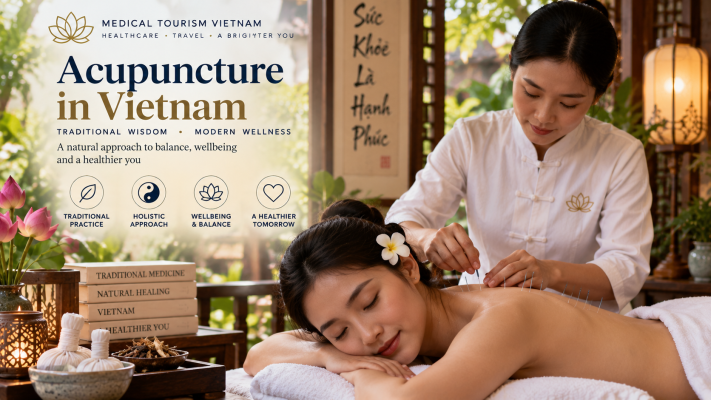
Acupuncture involves inserting very fine needles through the skin at selected points on the body. Some techniques involve manual manipulation of the needles, while others may incorporate mild electrical stimulation, known as electroacupuncture.
Although acupuncture developed within traditional systems of medicine, it is now practiced internationally and has been studied extensively using modern clinical research methods.
Acupuncture in Vietnam
Vietnam has its own longstanding traditions of medicine alongside influences from wider East Asian medical practice.
Visitors may therefore encounter acupuncture as part of traditional medicine, rehabilitation, pain-management or complementary-wellness services.
The environment can range from a hospital or specialist clinic to a wellness facility. The important consideration is not simply whether treatment is described as “traditional,” but who is providing it, their qualifications, hygiene standards and whether acupuncture is appropriate for the individual’s circumstances.
Why Do People Consider Acupuncture?
Pain management is one of the most commonly studied applications of acupuncture.
Research suggests acupuncture may be helpful for some pain conditions, including certain forms of back or neck pain, knee osteoarthritis and postoperative pain. It has also been studied for headaches, migraine and numerous other conditions. However, the quality and strength of evidence vary considerably according to the condition.
This distinction matters.
Evidence that acupuncture may help with a particular symptom or condition should not be interpreted as evidence that acupuncture can treat every illness.
What Happens During an Acupuncture Session?
A responsible practitioner should begin by asking about the reason for seeking treatment and relevant medical history.
This may include questions concerning:
- current symptoms;
- previous diagnoses;
- medications;
- previous surgery or treatment;
- pregnancy;
- bleeding disorders or anticoagulant medication;
- allergies or other health concerns; and
- previous experience with acupuncture.
Fine needles are then inserted at selected locations according to the treatment approach.
The number and location of needles, duration of treatment and number of sessions can vary.
Patients should feel comfortable asking the practitioner to explain what is being proposed before treatment begins.
Is Acupuncture Safe?
Acupuncture is generally considered to have a good safety record when performed appropriately by a competent practitioner using sterile needles.
Nevertheless, it is not completely risk-free.
Possible complications can include infection and injury. Serious adverse events are uncommon but improper technique can result in significant complications, including puncture of internal organs.
International visitors should therefore look beyond the appearance of a clinic or spa and consider the qualifications and clinical practices of the person actually performing the procedure.
Choosing an Acupuncture Practitioner in Vietnam
Before undergoing acupuncture, consider asking:
- What qualifications does the practitioner hold?
- How much experience do they have?
- Are sterile, single-use needles used?
- What is the purpose of the proposed treatment?
- How many sessions are being recommended and why?
- Are there reasons acupuncture may not be appropriate for me?
- Should I continue my existing medical treatment?
- What should I do if I experience an unexpected reaction?
Be cautious if a practitioner promises guaranteed results or claims acupuncture can cure serious diseases.
Acupuncture should not be used to delay appropriate medical assessment for a health problem. This is also specifically emphasised in current patient guidance from the U.S. National Center for Complementary and Integrative Health.
Acupuncture as Part of Wellness Travel
Not every international visitor seeking acupuncture in Vietnam is travelling specifically for medical treatment.
For some people it may form part of a broader wellness experience incorporating relaxation, traditional therapies, healthy food, gentle activity or time away from demanding routines.
That can be a legitimate part of wellness travel provided the distinction between wellbeing and medical treatment remains clear.
Vietnam’s combination of traditional practices and developing contemporary wellness facilities makes this an interesting area within the country’s broader wellness landscape.
Traditional Wellness in Vietnam
Acupuncture is only one aspect of traditional wellness encountered in Vietnam.
Other experiences may include herbal bathing, thermal or mineral bathing and culturally influenced approaches to relaxation and wellbeing.
Explore:
Hot Springs & Mud Bath Therapy
Claims concerning therapeutic benefits should be considered individually rather than assuming that something described as “traditional” or “natural” is automatically effective or risk-free.
Explore Wellness & Recovery in Vietnam
For our broader guide to traditional wellbeing, contemporary wellness, recovery programs and destination-based wellness travel:
Wellness & Recovery in Vietnam
Further Reading – Hanoi Trading Post
For broader editorial coverage of Vietnam, health, wellbeing, culture and developments across Asia, visit our associated independent publication, Hanoi Trading Post.
We do not currently have a dedicated Hanoi Trading Post feature specifically about acupuncture, so I would keep this as the general HTP link rather than forcing an unrelated article into the page.
Considering Acupuncture or Wellness in Vietnam?
Medical Tourism Vietnam can help international visitors understand wellness and healthcare options in Vietnam and, where appropriate, facilitate initial communication with selected providers.
Contact Medical Tourism Vietnam
There is no obligation to proceed. Final medical suitability, treatment recommendations and quotations are determined by the treating healthcare provider following individual assessment.
Medical Disclaimer
This page provides general educational information and does not constitute medical advice, diagnosis or a recommendation to undergo acupuncture.
Evidence supporting acupuncture varies according to the condition being treated. Individuals with medical conditions, those taking medication, pregnant patients or anyone considering acupuncture as an alternative to prescribed treatment should discuss their circumstances with an appropriately qualified healthcare professional.
About the Author
George Adams is the Founder and Editor of Medical Tourism Vietnam. Drawing on many years of experience living and working in Vietnam and across Asia, he develops patient-focused information designed to help international visitors better understand healthcare, wellness and medical-travel options throughout the region.
Editorial Policy
Medical Tourism Vietnam aims to provide clear, balanced and patient-focused information about healthcare, wellness and medical travel. Traditional and complementary therapies are discussed with consideration of both their cultural context and available evidence. Provider inclusion does not constitute a guarantee of treatment suitability or outcome.
Last Reviewed: 9 September 2026