




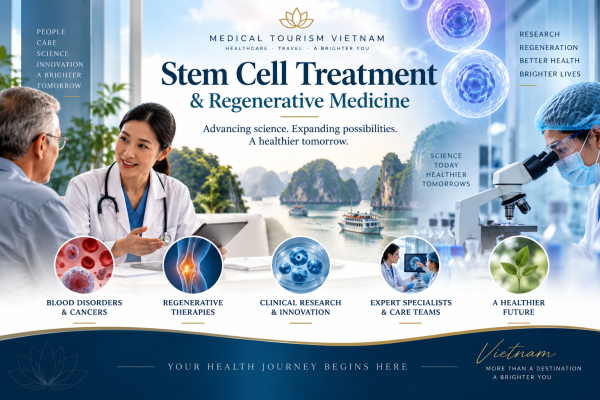
Stem cell therapies are an important area of modern medicine and medical research. However, the term “stem cell treatment” covers a wide range of therapies, and the strength of clinical evidence differs considerably depending on the condition being treated and the type of cells used.
Some stem cell treatments are established components of medical care. In particular, hematopoietic stem cell transplantation (HSCT) has long been used in the treatment of certain blood cancers, blood disorders and immune system conditions.
Other applications of stem cells and regenerative medicine remain under investigation. While research continues to explore their potential in areas such as neurological, cardiovascular, orthopaedic and other conditions, patients should distinguish carefully between established treatment, clinical research and commercially promoted therapies for which evidence may still be limited.
Medical Tourism Vietnam provides educational information to help international patients better understand these distinctions and make informed decisions when considering treatment overseas.
What Are Stem Cells?
Stem cells are cells with the ability to develop into different specialised cell types. They also have the capacity for self-renewal, making them important both in normal human biology and in medical research.
Different types of stem cells have different characteristics and potential clinical applications. These include hematopoietic stem cells, which produce blood cells, and mesenchymal stromal or stem cells, which continue to be studied for a range of possible regenerative and immunomodulatory applications.
The fact that a treatment uses stem cells does not, by itself, establish that it is safe or effective for a particular medical condition.
Established Stem Cell Treatments
One of the best-established uses of stem cells in medicine is hematopoietic stem cell transplantation.
HSCT may be used as part of treatment for selected conditions including:
- Leukaemia
- Lymphoma
- Multiple myeloma
- Myelodysplastic syndromes
- Aplastic anaemia
- Certain inherited blood and immune disorders
Depending on the condition, transplantation may use the patient’s own stem cells (autologous transplantation) or cells obtained from a suitable donor (allogeneic transplantation).
Stem cell transplantation is a complex medical procedure. It may involve chemotherapy or other conditioning treatment, specialist laboratory services, infection prevention, careful monitoring and extended follow-up.
Suitability must therefore be determined by a specialist haematology and transplantation team following detailed individual assessment.
Regenerative Medicine and Emerging Stem Cell Therapies
Stem cells are also being investigated in regenerative medicine because of their potential roles in tissue repair, immune regulation and the development of new therapeutic approaches.
Research is taking place across many areas of medicine, including neurological disease, musculoskeletal conditions, cardiovascular disease and other chronic or degenerative disorders.
However, research activity does not necessarily mean that a treatment has become established clinical practice.
The quality of evidence can vary substantially between different conditions and treatments. Some approaches may be undergoing formal clinical trials, while others may have limited evidence or remain experimental.
Patients considering an emerging stem cell therapy should ask what evidence supports its use specifically for their condition.
Questions to Ask Before Considering Stem Cell Treatment
Before travelling for stem cell treatment, patients should understand exactly what is being proposed.
Important questions include:
- What type of stem cells will be used?
- Where are the cells obtained?
- How are the cells processed and administered?
- Is the treatment established for my particular condition?
- What published clinical evidence supports its use?
- Is the treatment part of a registered clinical trial?
- What are the known and potential risks?
- Who regulates the laboratory and treatment facility?
- What experience does the medical team have with this treatment?
- What follow-up will be required?
- What happens if complications occur after I return home?
A reputable medical team should be able to discuss both the potential benefits and the limitations and uncertainties associated with treatment.
Understanding Claims About Stem Cell Therapy
Patients may encounter claims that stem cells can treat a very broad range of unrelated diseases or reverse ageing.
Such claims require particular caution.
A treatment that may have an established role in one disease should not automatically be assumed to work for another. Testimonials, individual patient stories and laboratory research are also not substitutes for appropriately designed clinical studies.
Patients should be particularly cautious when treatment is promoted using language such as “cure,” “guaranteed results,” “miracle treatment” or “anti-ageing rejuvenation” without strong clinical evidence supporting those claims.
Stem Cell Treatment in Asia
Several Asian countries have developed significant capabilities in haematology, transplantation, regenerative medicine and biomedical research.
For international patients, however, the country alone should not determine where treatment is undertaken.
More important considerations include the diagnosis, the particular treatment required, the expertise of the medical team, laboratory and hospital standards, the regulatory environment and the arrangements available for follow-up care.
Medical Tourism Vietnam also follows developments in specialist healthcare across Vietnam and the wider Asian region, including advanced haematology and cellular therapies.
Stem Cell Transplantation in China
China has developed specialist centres treating complex blood cancers and haematological disorders, including centres providing hematopoietic stem cell transplantation and other advanced cellular therapies.
Medical Tourism Vietnam has published a separate guide examining the work of GoBroad Healthcare Group in haematology and stem cell transplantation.
Explore: GoBroad Healthcare Group | Stem Cell Transplantation in China
Stem Cells, CAR-T and Cellular Therapy Are Not the Same Thing
Patients sometimes encounter the terms stem cell therapy, stem cell transplantation and CAR-T cell therapy together.
They are not interchangeable.
Hematopoietic stem cell transplantation involves blood-forming stem cells and is used in the management of selected blood cancers and other disorders.
CAR-T therapy is a form of cellular immunotherapy in which a patient’s T cells are modified to recognise particular targets on cancer cells.
Both may be used within highly specialised haematology and oncology settings, but their purposes, procedures, risks and suitability are different.
Medical Tourism Vietnam provides separate educational resources on advanced cancer treatments and cellular therapies for patients wishing to understand these developments in greater detail.
Considering Stem Cell Treatment Overseas?
Travelling overseas for stem cell treatment requires careful medical and practical planning.
Before proceeding, patients should ideally have a confirmed diagnosis and gather relevant medical records, laboratory results, imaging and previous treatment information. These can then be reviewed by an appropriate specialist to determine whether further consultation or assessment is warranted.
Medical Tourism Vietnam can assist international patients seeking information about specialist treatment pathways and appropriate healthcare providers in Vietnam and elsewhere in Asia.
Contact Medical Tourism Vietnam
If you are exploring stem cell transplantation, regenerative medicine or another specialist treatment, you can contact Medical Tourism Vietnam to discuss your enquiry and the information that may be required for preliminary medical review.
There is no obligation to proceed. Final medical suitability, treatment recommendations and quotations are determined by the treating healthcare provider following individual assessment.
Medical Disclaimer
The information provided on this page is for general educational purposes only and does not constitute medical advice, diagnosis or a recommendation for treatment.
Stem cell therapies vary substantially in their clinical evidence, regulatory status, potential benefits and risks. Some stem cell treatments are established for specific medical conditions, while other applications remain investigational or have limited supporting evidence.
Anyone considering stem cell treatment should obtain an individual assessment from an appropriately qualified medical specialist and understand the proposed treatment, available evidence, alternatives, potential risks and follow-up requirements before proceeding.
About the Author
George Adams is the founder and editor of Medical Tourism Vietnam and Hanoi Trading Post. He writes on healthcare, medical tourism and developments in specialist medical treatment across Asia.
Editorial Policy
Medical Tourism Vietnam publishes patient-focused educational information intended to help international patients better understand healthcare and treatment options. Provider information, where included, is presented in an educational context and does not constitute a guarantee of suitability or treatment outcome.
Last Reviewed
8 September 2026