





Hair Transplantation in Vietnam
Hair loss can affect confidence, appearance, and self-esteem for both men and women. Advances in hair restoration techniques have made hair transplantation a popular option for individuals seeking a long-term solution to hair loss.
Vietnam has emerged as an increasingly attractive destination for cosmetic and aesthetic procedures, including hair transplantation. Modern clinics, experienced surgeons, and growing international patient services have contributed to Vietnam’s reputation as a destination for hair restoration treatments.
Why Vietnam?
Vietnam combines modern medical facilities with experienced cosmetic surgery providers and a welcoming environment for international patients. Major cities such as Hanoi and Ho Chi Minh City offer access to clinics equipped with contemporary technology and healthcare professionals experienced in hair restoration procedures.
Many international patients also appreciate the opportunity to combine treatment with a period of recovery and sightseeing, allowing them to experience Vietnam’s culture, cuisine, and hospitality while completing their treatment journey.
When researching treatment options, patients should focus on the experience of the medical team, clinic standards, consultation process, and the suitability of the proposed treatment plan for their individual needs.
Who Is a Candidate?
Hair transplantation may be suitable for individuals experiencing:
- Male pattern baldness
- Female pattern hair thinning
- Receding hairlines
- Hair loss resulting from injury or scarring
- Hair loss following previous medical treatments or procedures
The suitability of a hair transplant depends on factors such as the cause of hair loss, the quality of donor hair, overall health, and individual expectations. A professional consultation is essential to determine whether a patient is an appropriate candidate for treatment.
FUE vs FUT: Understanding Your Hair Transplant Options
The two most common hair transplantation techniques are Follicular Unit Extraction (FUE) and Follicular Unit Transplantation (FUT). Both procedures can produce natural-looking, permanent results, but they differ in how hair follicles are harvested, recovery times, scarring, and suitability for different stages of hair loss. The infographic below provides a quick comparison of the two approaches.
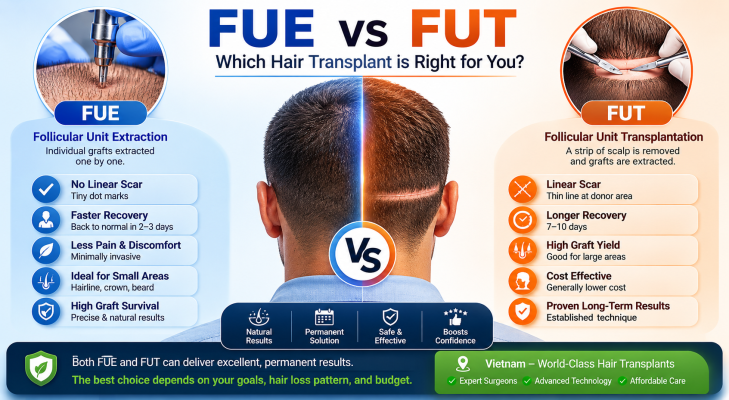
While FUE has become increasingly popular due to minimal scarring and faster recovery, FUT remains an effective option for patients requiring a larger number of grafts. The most appropriate technique depends on the extent of hair loss, donor hair availability, lifestyle considerations, and professional medical advice.
Follicular Unit Extraction (FUE)
FUE involves the extraction of individual hair follicles from the donor area, usually located at the back or sides of the scalp. These follicles are then transplanted into areas affected by hair loss.
Potential advantages include:
- Minimal visible scarring
- Faster recovery time
- Less post-procedure discomfort
- Suitable for patients who prefer shorter hairstyles
Follicular Unit Transplantation (FUT)
FUT involves removing a strip of scalp tissue from the donor area, from which individual follicular units are prepared and transplanted.
Potential advantages include:
- Ability to harvest a larger number of grafts in some cases
- Suitable for patients requiring extensive coverage
- May be appropriate for certain patterns of hair loss
Patients should discuss the advantages and limitations of each technique with their treating physician to determine the most suitable approach.
Recovery Expectations
Recovery experiences vary from patient to patient. Following treatment, patients may experience temporary redness, swelling, or mild discomfort in the treated areas.
Typical recovery milestones may include:
- Initial healing during the first one to two weeks
- Temporary shedding of transplanted hairs
- Gradual regrowth over several months
- Continued improvement in hair density and appearance over time
Following post-procedure instructions provided by the medical team is an important part of the recovery process.
Factors to Consider
Before undergoing hair transplantation, patients should carefully evaluate:
- The qualifications and experience of the surgeon
- Clinic accreditation and standards
- Realistic expectations regarding results
- Consultation and treatment planning processes
- Long-term hair loss management strategies
- Follow-up care and support
Choosing a reputable provider and ensuring clear communication throughout the treatment journey can help patients make informed decisions.
Featured Provider
Kangnam Aesthetic Hospital Hanoi
Kangnam Aesthetic Hospital is one of Vietnam’s established cosmetic surgery providers, offering a range of aesthetic procedures for both domestic and international patients.
The hospital provides consultations and treatment planning designed to help patients understand available options and determine whether hair restoration procedures may be appropriate for their individual circumstances.
Patients considering treatment are encouraged to undertake independent research and obtain professional medical advice before proceeding with any procedure.
Disclaimer
Medical Tourism Vietnam provides information to assist patients in researching treatment options and healthcare providers. We do not provide medical advice, endorse specific treatments, or guarantee outcomes. Patients should seek independent professional medical guidance before making healthcare decisions.