





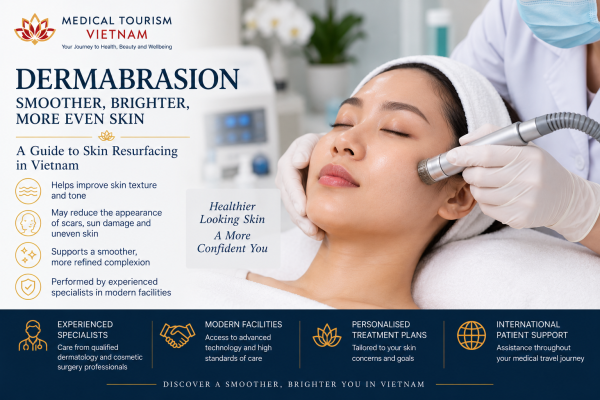
Dermabrasion is a skin-resurfacing procedure that uses a specialised mechanical instrument to remove controlled layers of the skin. As the treated area heals, new skin forms, potentially creating a smoother and more even surface.
The procedure may be considered for selected scars, uneven skin texture and other surface irregularities. Unlike chemical peels, which use chemical solutions to produce controlled resurfacing, dermabrasion works through a mechanical process.
Because treatment depth and skin response vary considerably between individuals, careful assessment is particularly important when considering dermabrasion.
What Is Dermabrasion?
Dermabrasion is a controlled resurfacing technique in which an appropriately trained healthcare professional uses a specialised instrument to remove selected outer layers of skin.
The depth of treatment depends on the skin concern being addressed, the area being treated and the patient’s individual skin characteristics.
Dermabrasion is more intensive than many superficial cosmetic skin treatments and should not be confused with microdermabrasion, which generally provides much lighter surface exfoliation.
What Can Dermabrasion Treat?
Depending on individual circumstances, dermabrasion may be considered for:
- Selected acne scars
- Certain scars resulting from injury or surgery
- Uneven or rough skin texture
- Selected sun-related skin changes
- Some superficial lines
- Certain surface irregularities
Not every scar or skin concern is suitable for dermabrasion.
The type, depth, location and age of a scar can influence whether resurfacing is likely to be beneficial.
Dermabrasion and Facial Rejuvenation
Dermabrasion is one of several approaches that may be considered when addressing facial skin texture and appearance.
Patients researching broader facial treatment options can also explore our guide to Facial Cosmetic Procedures in Vietnam, which covers surgical and aesthetic procedures involving different areas of the face.
Hyperlink “Facial Cosmetic Procedures in Vietnam” to:https://medicaltourismvietnam.com/procedures/facial/
Dermabrasion should not automatically be viewed as an alternative to every other facial treatment. The appropriate approach depends on whether the primary concern involves the skin surface, pigmentation, volume, facial structure or skin laxity.
Dermabrasion vs Microdermabrasion
Despite their similar names, dermabrasion and microdermabrasion are substantially different treatments.
Dermabrasion is a more intensive procedure that removes deeper layers of the skin and involves a more significant healing process.
Microdermabrasion generally provides superficial exfoliation and typically has considerably less downtime.
Patients should establish exactly which procedure a clinic is offering rather than assuming the terms are interchangeable.
Dermabrasion vs Chemical Peels
Both dermabrasion and chemical peels can resurface the skin, but they achieve this in different ways.
Dermabrasion uses a mechanical instrument to remove controlled layers of skin.
Chemical peels use a chemical solution to produce a controlled resurfacing effect.
The appropriate option depends on factors such as:
- The condition being treated
- Treatment depth required
- Skin type and tone
- Pigmentation risk
- Previous treatments
- Acceptable recovery time
- Practitioner assessment
Explore Chemical Peels in Vietnam
Skin Tone and Pigmentation Considerations
Skin type and pigmentation require careful consideration before resurfacing procedures.
Because dermabrasion deliberately produces controlled skin injury, changes in pigmentation can occur during healing.
One potential concern is post-inflammatory hyperpigmentation (PIH), in which treated skin becomes darker following inflammation or injury. Hypopigmentation, where skin becomes lighter, can also occur.
These considerations may be particularly relevant for people with more pigment-rich skin.
An appropriately qualified practitioner should assess individual skin characteristics and discuss pigmentation risk before recommending treatment.
Who May Be Suitable for Dermabrasion?
Suitability depends on the skin concern, treatment area, general health and individual healing characteristics.
Assessment may consider:
- Type and depth of scarring
- Skin tone and pigmentation
- Previous skin treatments
- History of abnormal scarring
- Active acne or skin inflammation
- Skin infections
- Medications
- General health
- Smoking or nicotine use
- Previous pigmentation changes
- Expectations from treatment
Not every patient seeking smoother skin will be an appropriate candidate.
Your Dermabrasion Consultation
A consultation should identify exactly what the patient hopes to improve and whether dermabrasion is an appropriate method of achieving that objective.
Discussion may include:
- Skin concerns
- Scar characteristics
- Treatment area
- Proposed depth of resurfacing
- Expected degree of improvement
- Anaesthesia or pain management where relevant
- Recovery
- Pigmentation risk
- Potential complications
- Alternative treatments
Patients should understand that improvement does not necessarily mean complete removal of scars or other skin irregularities.
What Happens During Dermabrasion?
The precise procedure varies according to the treatment area and depth required.
After the skin has been appropriately prepared, a specialised rotating or abrasive instrument may be used to remove controlled layers of the skin.
Treatment depth is carefully managed according to the clinical objective.
Because deeper dermabrasion can be considerably more intensive than superficial cosmetic treatments, appropriate clinical facilities, pain management and practitioner experience are important considerations.
Patients should receive a procedure-specific explanation from their treating provider.
Recovery After Dermabrasion
Recovery depends on the depth and extent of treatment.
The treated skin may initially appear red, swollen, sensitive or raw as healing begins. New skin gradually forms over the treated area.
Changes in redness or skin colour may remain visible for some time after the initial healing period.
Patients should follow their practitioner’s individual instructions regarding:
- Skin care
- Cleansing
- Dressings where required
- Moisturising or prescribed products
- Physical activity
- Cosmetics
- Sun exposure
- Follow-up appointments
Fixed recovery times should be treated cautiously because healing varies between individuals and according to treatment depth.
Sun Protection After Dermabrasion
Recently resurfaced skin can be particularly sensitive to ultraviolet exposure.
Appropriate sun protection is therefore an important part of recovery and may help reduce the risk of unwanted pigmentation changes.
This deserves particular attention for patients undergoing treatment in Vietnam’s tropical climate.
The treating practitioner should advise when and how sun protection should be used and when normal outdoor activities can resume.
When Will Results Be Visible?
Results develop as the skin heals and continues to settle.
Immediately following treatment, redness, swelling and other healing changes can make it difficult to assess the eventual result.
Improvement also depends on the condition being treated. Dermabrasion may reduce the visibility of selected scars or textural irregularities without eliminating them completely.
Patients should discuss realistic expectations before treatment.
Risks and Possible Complications
Dermabrasion involves controlled injury to the skin and therefore carries potential risks.
These may include:
- Infection
- Persistent redness
- Changes in pigmentation
- Scarring
- Changes in skin texture
- Prolonged sensitivity
- Delayed healing
- Uneven results
- Unsatisfactory cosmetic outcome
Risk can vary according to treatment depth, skin characteristics, practitioner technique and aftercare.
Patients should discuss their individual risk profile before proceeding.
Dermabrasion and Acne Scarring
Acne scars vary considerably in shape and depth.
Some types of scarring may respond better to dermabrasion than others, while certain scars may require different or combined approaches.
Active acne and established acne scarring are also different conditions and should not automatically be treated in the same way.
A professional assessment can help determine whether dermabrasion, another resurfacing technique or a different treatment approach is appropriate.
Why Consider Dermabrasion in Vietnam?
Vietnam has a growing dermatology, aesthetic medicine and cosmetic treatment sector, particularly in major centres such as Ho Chi Minh City and Hanoi.
International patients may have access to private hospitals and specialist clinics offering skin assessment and resurfacing procedures.
When comparing providers, consider:
- Practitioner qualifications
- Experience performing dermabrasion
- Experience treating your particular skin type
- Experience with your type of scarring or skin concern
- Treatment setting
- Infection-control standards
- Proposed treatment depth
- Pain-management arrangements
- Post-treatment care
- Management of complications
- International patient support
Price should be considered alongside clinical suitability, practitioner experience and aftercare rather than being the primary reason for selecting treatment.
Planning Dermabrasion Treatment in Vietnam
International patients should consider recovery when planning their visit.
A skin-resurfacing procedure immediately before extensive sightseeing, beach activities or prolonged sun exposure may not be appropriate.
Before confirming treatment, establish:
- How much recovery time is expected
- How visible the treated area may be during healing
- When follow-up will occur
- What skincare will be required
- When cosmetics can be resumed
- When sun exposure is appropriate
- Who to contact if an unexpected reaction occurs
- Whether follow-up will be required after returning home
Treatment and recovery should determine the travel itinerary.
Questions to Ask Your Practitioner
Before undergoing dermabrasion, consider asking:
- Is dermabrasion appropriate for my particular skin concern?
- What degree of improvement can I realistically expect?
- How deep will the treatment be?
- What experience do you have treating my skin type?
- What is my risk of pigmentation changes?
- What recovery should I expect?
- What alternatives should I consider?
- How will discomfort be managed?
- What aftercare will I need?
- What happens if a complication develops?
Clear answers can help patients make a more informed treatment decision.
Considering Dermabrasion in Vietnam?
If you are exploring dermabrasion or other facial aesthetic treatments in Vietnam, Medical Tourism Vietnam can help you take the next step.
We can assist with preliminary enquiries and help obtain information from suitable healthcare providers regarding:
- Specialist consultations
- Skin assessment
- Dermabrasion treatment options
- Alternative resurfacing procedures
- Indicative treatment costs
- Expected recovery
- Appointment availability
- International patient arrangements
Enquire About Dermabrasion in Vietnam
Link this heading/button to your Contact Us page.
There is no obligation to proceed. Final treatment suitability, recommendations and quotations are determined by the treating healthcare provider following individual assessment.
Continue Exploring Facial Cosmetic Procedures
← Facial Cosmetic Procedures in Vietnam
Medical Disclaimer
The information provided on this page is for general educational purposes only and does not constitute medical advice, diagnosis or a recommendation for treatment.
Dermabrasion is a skin-resurfacing procedure with potential risks, including changes in pigmentation and scarring. Suitability, treatment depth, expected outcomes and recovery depend on individual skin characteristics and circumstances. Anyone considering treatment should obtain an individual assessment from an appropriately qualified healthcare professional and understand the potential benefits, limitations and risks before proceeding.
About the Author
George Adams is the founder and editor of Medical Tourism Vietnam and Hanoi Trading Post. He writes on healthcare, medical tourism and developments in specialist medical treatment across Asia.
Editorial Policy
Medical Tourism Vietnam publishes patient-focused educational information intended to help international patients better understand healthcare and treatment options. Provider information, where included, is presented in an educational context and does not constitute a guarantee of suitability or treatment outcome.
Last Reviewed: 7 September 2026