




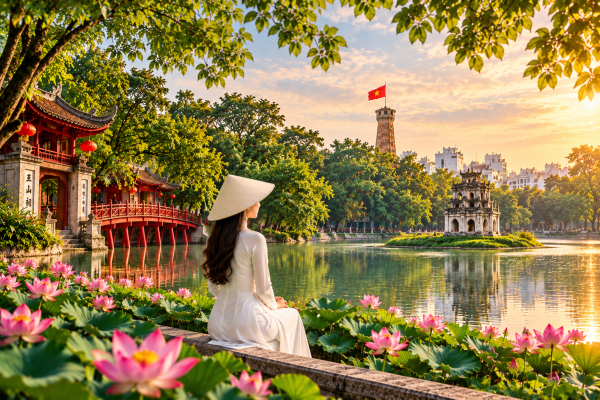
Hanoi, Vietnam — Timeless Heritage, Tranquil Escapes and Cultural Discovery
Discover the cultural heart of Vietnam, where ancient temples, peaceful lakes, traditional architecture and centuries of history create an unforgettable destination for cultural exploration, relaxation and extended stays.
Discover Hanoi — Where Vietnam’s Past Comes Alive
Hanoi is a city that rewards those who take their time.
As Vietnam’s capital and one of Southeast Asia’s most historically fascinating cities, Hanoi offers a captivating combination of ancient architecture, tree-lined boulevards, peaceful lakes, traditional neighbourhoods and a rich artistic heritage.
Unlike destinations defined primarily by beaches or modern resorts, Hanoi invites visitors to explore the deeper cultural identity of Vietnam.
Here, centuries-old temples stand alongside elegant French colonial buildings, traditional markets thrive within narrow streets, and quiet courtyards provide unexpected moments of tranquillity.
For international visitors considering a longer stay in Vietnam, Hanoi offers much more than conventional sightseeing. Its historic landmarks, cultural attractions, comfortable accommodation and peaceful surroundings provide opportunities for relaxation, exploration and personal reflection.
Hoàn Kiếm Lake — The Soul of Hanoi
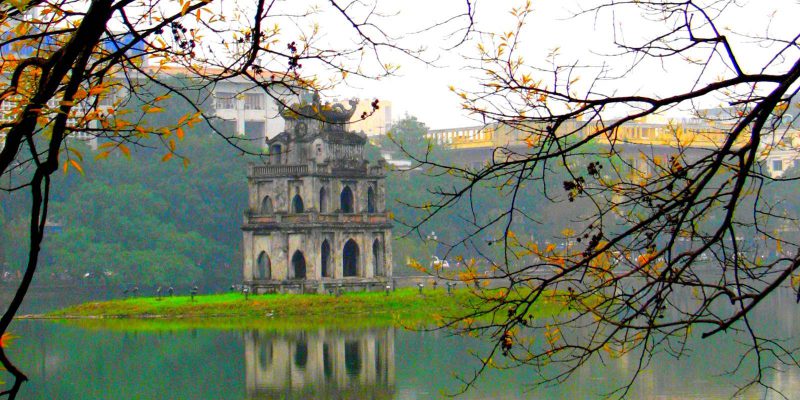
At the heart of Hanoi lies Hoàn Kiếm Lake, one of Vietnam’s most recognisable and cherished landmarks.
Surrounded by mature trees, shaded pathways and historic buildings, the lake provides a beautiful contrast to the energy of the surrounding city.
Its name, meaning Lake of the Returned Sword, comes from a celebrated Vietnamese legend associated with Emperor Lê Lợi and a magical sword returned to a golden turtle.
Rising from the lake is the picturesque Turtle Tower, while the graceful red Thê Húc Bridge leads visitors towards Ngọc Sơn Temple.
Early mornings are particularly special. Local residents gather for gentle exercise, walking and conversation as the city gradually awakens.
For visitors staying in Hanoi, the lake is an ideal place to begin the day, enjoy a peaceful walk or simply sit and observe daily Vietnamese life.
The Temple of Literature — A Celebration of Knowledge and Tradition
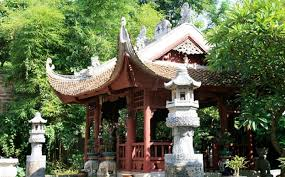
Founded in 1070, the Temple of Literature (Văn Miếu) is among Hanoi’s most significant cultural landmarks.
Dedicated to Confucius and associated with Vietnam’s early tradition of higher learning, the complex is renowned for its harmonious courtyards, traditional architecture, ornamental gardens and historic stone stelae.
The temple’s peaceful setting offers visitors an opportunity to appreciate the importance of education, scholarship and cultural continuity in Vietnamese society.
Walking through its carefully arranged courtyards reveals a sense of balance and dignity that has endured through centuries of change.
For those interested in Vietnamese history, architecture and philosophy, the Temple of Literature is an essential Hanoi experience.
The Imperial Citadel of Thăng Long — A Thousand Years of History
The Imperial Citadel of Thăng Long is one of Vietnam’s most important archaeological and historical sites.
Recognised as a UNESCO World Heritage Site, the complex preserves evidence of successive Vietnamese dynasties and the country’s long history of political and cultural development.
Its historic gateways, archaeological remains and ceremonial spaces reveal the evolution of Hanoi from an ancient imperial capital into the modern city visitors experience today.
The nearby Hanoi Flag Tower is another enduring symbol of the capital’s history.
Visitors interested in exploring the historical significance of the citadel can consult the UNESCO World Heritage description of the Imperial Citadel of Thăng Long.
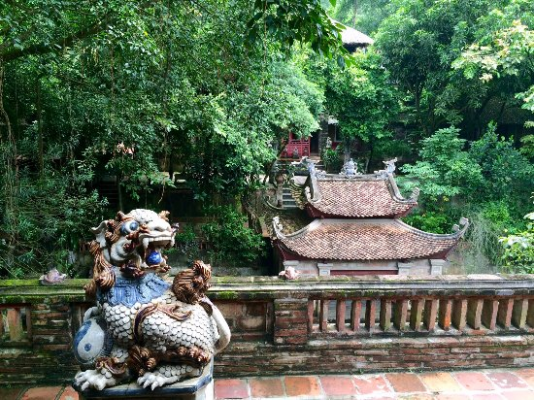
Việt Phủ Thành Chương — A Hidden Sanctuary of Vietnamese Heritage and Tranquillity
Beyond Hanoi’s busy streets, in the peaceful countryside of Sóc Sơn, lies one of northern Vietnam’s most enchanting and lesser-known cultural treasures: Việt Phủ Thành Chương (Thanh Chuong Viet Palace).
Created by celebrated Vietnamese artist Thành Chương beginning in 2001, this remarkable cultural complex brings together traditional wooden houses, ancient sculptures, peaceful courtyards, gardens, ponds and architectural treasures reflecting centuries of Vietnamese heritage.
Yet perhaps its most memorable quality is something much simpler: tranquillity.
Shaded pathways wind between traditional buildings, while gardens and quiet courtyards create an atmosphere that encourages visitors to slow down and appreciate their surroundings.
Unlike Hanoi’s more familiar tourist attractions, Việt Phủ Thành Chương is best experienced without rushing.
Visitors can admire the architecture, enjoy the peaceful gardens, appreciate traditional Vietnamese craftsmanship or spend time in quiet contemplation.
For those who enjoy meditation, mindfulness and reflective travel, the setting offers an appealing escape from the noise and movement of modern city life.
Traditional architecture, carefully preserved artefacts and natural surroundings create an extraordinary sense of connection with Vietnam’s cultural past.
It is easy to imagine spending an entire afternoon here, discovering another secluded courtyard, sitting beneath the trees or simply enjoying the beauty of the surrounding landscape.
For international visitors planning an extended stay in Hanoi, Việt Phủ Thành Chương provides a distinctive cultural excursion and a wonderful introduction to the quieter side of Vietnamese life.
Medical Tourism Vietnam has previously featured this extraordinary attraction in our article, Thanh Chuong Viet Palace — A Not-to-Miss Destination in Hanoi, exploring its traditional houses, architecture, art collections and peaceful gardens.
Planning your visit: Located in Sóc Sơn, approximately 35 kilometres from central Hanoi. Consult the official Việt Phủ Thành Chương website for current opening hours, admission arrangements and visitor information.
Hanoi’s Old Quarter — Living History and Traditional Street Life
Hanoi’s Old Quarter offers a lively contrast to the city’s tranquil gardens and historic temple courtyards.
Its narrow streets, traditional shophouses, family businesses and bustling markets preserve elements of Hanoi’s commercial heritage.
Many streets were historically associated with particular trades, including silk, silver and traditional crafts.
Today, visitors can explore artisan shops, enjoy Vietnamese coffee, sample local cuisine and observe the rhythms of everyday life.
The Old Quarter is particularly rewarding for travellers interested in photography, architecture, traditional food and the living culture of Vietnam.
For a more relaxed experience, early morning walks or visits to quieter side streets can be especially enjoyable.
Traditional Arts, Water Puppetry and Vietnamese Culture
Hanoi is also a centre of traditional Vietnamese arts and cultural performance.
One of its best-known attractions is Thăng Long Water Puppet Theatre, where colourful wooden puppets perform scenes inspired by rural Vietnamese life, folklore and historic legends.
Accompanied by traditional musicians, water puppetry offers visitors an entertaining introduction to an art form closely associated with the culture of northern Vietnam.
Hanoi’s galleries, craft workshops, museums and traditional music performances provide further opportunities to appreciate the country’s artistic heritage.
Comfortable Accommodation and Extended Stays in Hanoi
Accommodation plays an important role in enjoying Hanoi at a comfortable pace.
Visitors can choose from boutique hotels in historic neighbourhoods, contemporary international properties and quieter accommodation away from the busiest streets.
For those who appreciate traditional hospitality combined with modern comforts, the Silk Path properties provide established accommodation options.
Silk Path Hotel Hanoi
Situated near Hanoi’s historic Old Quarter, Silk Path Hotel Hanoi offers convenient access to the capital’s cultural attractions, traditional shopping streets and restaurants.
Its accommodation, dining facilities and central location make it an appealing choice for visitors wishing to explore Hanoi while enjoying modern comforts.
Silk Path Boutique Hanoi
Overlooking Hoàn Kiếm Lake, Silk Path Boutique Hanoi offers an intimate accommodation experience close to one of the capital’s most beautiful landmarks.
Its lakeside location makes it particularly appealing for visitors who enjoy morning walks, cultural exploration and easy access to Hanoi’s historic centre.
Choosing accommodation close to Hoàn Kiếm Lake or within convenient reach of Hanoi’s major cultural attractions can make a longer stay particularly enjoyable.
Visitors with mobility requirements, medical appointments or specific accessibility needs should confirm suitable facilities and transport arrangements before booking.
Healthcare Access and Medical Travel in Hanoi
Although Hanoi’s cultural heritage is the principal focus of this destination guide, the capital also offers access to hospitals, medical specialists, diagnostic services and dental care.
International visitors considering healthcare services should research providers carefully, confirm professional qualifications and discuss proposed treatment with appropriately qualified healthcare professionals.
Medical Tourism Vietnam provides information about healthcare options through our Hanoi Clinics for International Patients resource.
Visitors can also explore our Dental Care in Vietnam information and learn more about practical arrangements through our International Patient Process & Support Services guide.
Visitors planning cultural excursions after medical treatment should follow their treating clinician’s advice regarding travel, physical activity and recovery.
Hanoi for Wellness, Reflection and Extended Stays
Hanoi’s appeal extends beyond its historic landmarks.
Its lakeside walks, traditional gardens, quiet cultural retreats, tea houses and artistic heritage provide opportunities to enjoy a slower, more thoughtful style of travel.
Visitors may wish to combine mornings exploring historic temples with afternoons relaxing in a shaded garden or discovering traditional Vietnamese tea culture.
For those interested in the broader possibilities of wellness-focused travel, Medical Tourism Vietnam also provides information about Wellness and Spa Experiences in Vietnam.
Hanoi’s atmosphere is particularly appealing to visitors who value cultural discovery, personal reflection and meaningful experiences rather than a tightly scheduled holiday.
Wellness travel should not be confused with medical rehabilitation, and activities following treatment should always be appropriate to an individual’s health and recovery needs.
Exploring Beyond Hanoi
Hanoi also serves as an excellent starting point for discovering the landscapes and cultural traditions of northern Vietnam.
Visitors wishing to explore Vietnam’s mountain scenery, terraced rice fields and ethnic minority cultures may enjoy our Sa Pa destination guide.
For travellers interested in exploring other regions of Vietnam, our Medical Tourism Vietnam Destinations section introduces additional cities, heritage towns, coastal retreats and wellness destinations.
Plan Your Hanoi Experience with Medical Tourism Vietnam
Whether your interests lie in ancient Vietnamese history, traditional architecture, peaceful lakeside walks or discovering lesser-known cultural treasures, Hanoi offers a rewarding destination for an extended stay.
From the timeless beauty of Hoàn Kiếm Lake and the scholarly courtyards of the Temple of Literature to the extraordinary tranquillity of Việt Phủ Thành Chương, Hanoi invites visitors to experience Vietnam’s heritage at their own pace.
For those combining travel with healthcare enquiries, Medical Tourism Vietnam can help visitors understand the international patient process and explore appropriate next steps.
Learn more through our International Patient Process & Support Services.
Medical Tourism Vietnam provides healthcare information and patient facilitation support. We do not provide medical treatment or guarantee clinical outcomes. Visitors should seek individual advice from qualified healthcare professionals.