





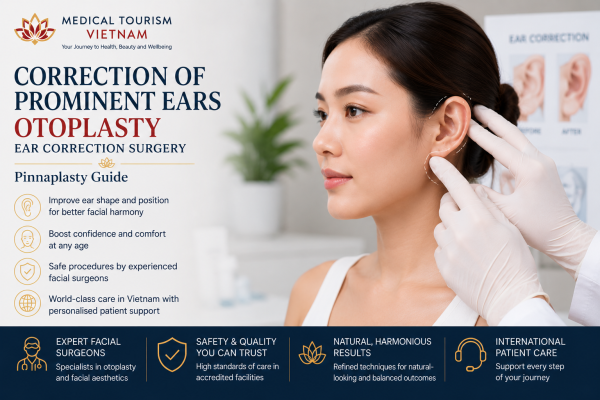
Otoplasty is a form of cosmetic surgery used to change the shape, position or projection of the ears. It is commonly performed to correct ears that project noticeably away from the head, although the procedure can also address certain differences in ear shape, size or symmetry.
The procedure is also known as prominent ear correction, ear pinning or pinnaplasty.
For international patients considering otoplasty in Vietnam, careful assessment is important. Ear anatomy varies considerably, and the appropriate surgical technique depends on the particular cartilage structure, degree of projection and desired outcome.
What Is Otoplasty?
Otoplasty refers to surgery designed to reshape or reposition the external ear.
In prominent ear correction, the objective is generally to reduce excessive projection while maintaining a natural relationship between the ear and the side of the head.
Surgery may involve reshaping existing cartilage, repositioning parts of the ear or using sutures to help create or maintain the desired contour.
The aim should not necessarily be to make both ears identical. Natural ears usually have some degree of asymmetry.
What Can Otoplasty Address?
Otoplasty may be considered for concerns including:
- Ears that project noticeably from the head
- Differences in projection between the ears
- Limited or poorly defined natural ear folds
- Selected differences in ear shape
- Certain forms of ear asymmetry
- Dissatisfaction following previous ear surgery
The appropriate procedure depends on the underlying ear anatomy rather than appearance alone.
Why Do Some Ears Appear Prominent?
Ear prominence can result from several anatomical characteristics.
In some people, the natural fold of the upper ear cartilage is less developed. In others, the central cartilage of the ear may be relatively prominent or positioned further away from the head.
Some patients have a combination of these characteristics.
Understanding why the ear projects is important because different anatomical causes may require different surgical approaches.
Otoplasty and Facial Balance
Although otoplasty focuses on the ears, surgical planning should consider their relationship with the head, face and overall facial proportions. Patients considering ear correction may also find it useful to explore our guide to Facial Cosmetic Procedures in Vietnam, which provides an overview of surgical and aesthetic treatment options affecting facial balance and appearance.
The surgeon may assess:
- Ear projection
- Ear size and shape
- Cartilage structure
- Natural folds
- Position of the ears
- Differences between the two sides
- Relationship between the ears and facial proportions
A natural-looking result generally preserves normal contours rather than simply positioning the ears as close to the head as possible.
Otoplasty for Adults
Adults may consider otoplasty because prominent or asymmetrical ears have concerned them for many years or because they simply wish to alter their appearance.
An adult consultation should explore the patient’s reasons for considering surgery, expectations and understanding of the potential benefits and limitations.
Age alone does not determine suitability. General health, ear anatomy and individual circumstances are more important considerations.
Otoplasty for Children and Younger Patients
Prominent ear correction is also performed in younger patients in appropriate circumstances.
However, cosmetic surgery involving a child requires particularly careful consideration.
Assessment may involve:
- Ear development
- Physical health
- The child’s own feelings about their ears
- Reasons surgery is being considered
- Ability to understand and cooperate with treatment and recovery
- Parent or guardian involvement
- Potential benefits and risks
Decisions should be made with an appropriately qualified healthcare professional and should prioritise the wellbeing and interests of the young person.
International travel adds further considerations, and families contemplating treatment overseas should discuss these carefully with the treating provider.
Who May Be Suitable for Otoplasty?
Potential candidates may include people who are concerned about the shape or projection of their ears and have realistic expectations about what surgery can achieve.
Assessment should consider:
- General health
- Ear anatomy and cartilage
- Previous ear surgery or injury
- Skin condition around the ears
- Healing history
- Medications
- Smoking or nicotine use
- Expectations from treatment
Individual assessment is necessary because the same surgical approach is not appropriate for every ear.
Your Otoplasty Consultation
During consultation, the surgeon should examine both ears individually and together.
This is important because differences between the ears may influence surgical planning.
The consultation may include discussion of:
- What you would like to change
- Existing ear shape and projection
- Natural asymmetry
- Proposed surgical technique
- Incision location
- Anaesthesia
- Expected outcome
- Scarring
- Recovery
- Potential complications
- Possibility of revision surgery
Patients should understand the proposed degree of correction and what constitutes a realistic result.
What Does Otoplasty Surgery Involve?
Otoplasty techniques vary according to the patient’s ear anatomy and the changes being made.
Surgery may involve reshaping, repositioning or supporting the ear cartilage. Incisions are often positioned where resulting scars can be relatively inconspicuous, although the exact approach depends on the procedure.
The surgeon may use sutures or other techniques to establish and maintain the planned ear contour.
Rather than relying on a generic description of otoplasty, patients should ask their surgeon to explain exactly what is proposed for their ears and why.
Recovery After Otoplasty
Swelling, tenderness, bruising and temporary changes in sensation can occur after ear surgery.
The ears may initially look different from the anticipated final result because of postoperative swelling.
Depending on the procedure, patients may be advised to use a dressing or supportive headband during part of the recovery period.
The treating surgeon should provide individual instructions regarding:
- Wound care
- Dressings
- Sleeping
- Hair washing
- Physical activity
- Returning to work or school
- Sport and other activities
- Follow-up appointments
Patients should follow their surgeon’s specific instructions rather than relying on fixed recovery schedules found online.
When Will the Final Result Be Visible?
Changes in ear position are generally apparent after surgery, but swelling and healing can initially affect the appearance.
The ears gradually settle as healing progresses.
Some degree of natural difference between the two ears should be expected. Perfect symmetry is not a realistic objective because ears are rarely identical before or after surgery.
Your surgeon should explain when the result can reasonably be assessed.
Scarring After Otoplasty
Otoplasty involves surgical incisions and therefore produces scars.
Where those incisions are located depends on the surgical approach.
Scars often become less noticeable with time, but healing varies between individuals. People with a history of raised or abnormal scarring should discuss this with their surgeon before treatment.
Patients should not assume that any surgical procedure can be completely “scarless.”
Risks and Possible Complications
As with any surgical procedure, otoplasty carries potential risks.
These may include:
- Infection
- Bleeding or haematoma
- Swelling
- Changes in sensation
- Scarring
- Persistent asymmetry
- Overcorrection or undercorrection
- Changes in cartilage contour
- Suture-related problems
- Unsatisfactory cosmetic outcome
- Need for revision surgery
- Anaesthesia-related complications
Some complications are uncommon but potentially significant.
Patients should discuss their individual risks with the treating surgeon before deciding to proceed.
Can Prominent Ears Return After Surgery?
Otoplasty is intended to create a lasting change, but healing varies and some degree of recurrence or change in ear position can occur.
Cartilage has natural elasticity, and surgical results depend on anatomy, technique and healing.
Patients should ask their surgeon about the likelihood of recurrence with the proposed technique and how any significant postoperative change would be managed.
Why Consider Otoplasty in Vietnam?
Vietnam has a growing cosmetic and reconstructive surgery sector, particularly in major centres such as Ho Chi Minh City and Hanoi.
International patients may have access to private hospitals and cosmetic surgery providers offering facial and ear procedures.
However, choosing a surgeon should not be based primarily on price.
When comparing providers, consider:
- Surgeon’s qualifications
- Experience performing otoplasty
- Experience with the particular ear concern being treated
- Hospital or clinic standards
- Anaesthesia arrangements
- Preoperative assessment
- Postoperative care
- Management of complications
- Communication with international patients
Patients should be able to understand who will perform the operation, where it will take place and who will be responsible for postoperative care.
Planning Otoplasty in Vietnam
International patients should allow sufficient time for consultation, surgery and postoperative review before leaving Vietnam.
Before confirming travel, ask:
- How long should I remain in Vietnam?
- When will postoperative reviews occur?
- Will dressings or a headband be required?
- When can I safely fly?
- What follow-up will I need after returning home?
- Who should I contact if a problem develops?
- How would complications be managed after I leave Vietnam?
Treatment and recovery requirements should determine the travel itinerary rather than attempting to fit surgery into a tightly scheduled holiday.
Questions to Ask Your Surgeon
Before proceeding with otoplasty, consider asking:
- How frequently do you perform prominent ear correction?
- What causes my ears to appear prominent?
- What technique are you recommending and why?
- Where will the incisions be made?
- What degree of correction can I realistically expect?
- How will differences between my ears be addressed?
- What are the main risks in my case?
- What scarring should I expect?
- Could the ears become prominent again?
- How long should I remain in Vietnam after surgery?
- What happens if revision surgery is required?
Clear answers can help patients make a more informed decision.
Considering Otoplasty in Vietnam?
If you are exploring prominent ear correction or other facial cosmetic procedures in Vietnam, Medical Tourism Vietnam can help you take the next step.
We can assist with preliminary enquiries and help obtain information from suitable healthcare providers regarding:
- Specialist consultations
- Otoplasty treatment options
- Preliminary provider assessment where available
- Indicative treatment costs
- Expected length of stay
- Appointment availability
- International patient arrangements
- Postoperative planning
Enquire About Otoplasty in Vietnam
Link this heading/button to your Contact Us page.
There is no obligation to proceed. Final medical suitability, treatment recommendations and quotations are determined by the treating healthcare provider following individual assessment.
Continue Exploring Facial Cosmetic Procedures
← Facial Cosmetic Procedures in Vietnam
Medical Disclaimer
The information provided on this page is for general educational purposes only and does not constitute medical advice, diagnosis or a recommendation for treatment.
Otoplasty is an invasive surgical procedure and carries potential risks. Suitability, surgical technique, expected outcomes and recovery depend on individual circumstances. Anyone considering treatment should obtain an individual assessment from an appropriately qualified healthcare professional and understand the potential benefits, limitations and risks before proceeding.
For children and younger patients, treatment decisions require additional consideration of development, consent and the wellbeing of the young person.
About the Author
George Adams is the founder and editor of Medical Tourism Vietnam and Hanoi Trading Post. He writes on healthcare, medical tourism and developments in specialist medical treatment across Asia.
Editorial Policy
Medical Tourism Vietnam publishes patient-focused educational information intended to help international patients better understand healthcare and treatment options. Provider information, where included, is presented in an educational context and does not constitute a guarantee of suitability or treatment outcome.
Last Reviewed: 6 September 2026