




Introduction
Liver cancer is one of the most common cancers worldwide and often develops in people with chronic liver disease, hepatitis or cirrhosis. Early diagnosis and specialist treatment can significantly improve treatment options and outcomes.
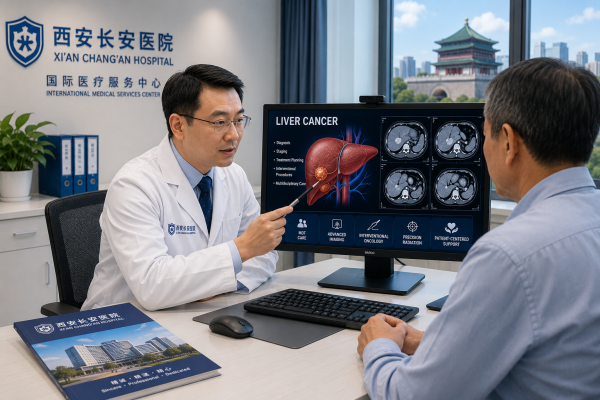
At Chang’an Hospital Xi’an, liver cancer care is delivered through a multidisciplinary team that combines surgical oncology, medical oncology, radiation oncology and interventional procedures to develop an individualised treatment plan for each patient.
Part of the Chang’an Hospital Cancer Treatment Guide Series
Understanding Liver Cancer
The liver performs many essential functions, including filtering toxins, producing proteins and supporting digestion. Liver cancer occurs when abnormal cells grow uncontrollably within the liver.
The most common primary liver cancer is hepatocellular carcinoma (HCC), although other types may also occur. Liver cancer may develop in people with chronic hepatitis B or C infection, cirrhosis, fatty liver disease or other long-term liver conditions.
Common Symptoms
Symptoms may include:
- Persistent upper abdominal pain
- Weight loss
- Loss of appetite
- Fatigue
- Jaundice
- Abdominal swelling
- Nausea
- General weakness
Some patients experience few or no symptoms during the early stages.
Diagnosis
Accurate diagnosis is essential for selecting the most appropriate treatment.
Investigations may include:
- Medical history and physical examination
- Blood tests
- Liver function tests
- Tumour marker testing (AFP)
- Ultrasound
- CT scan
- MRI
- PET-CT where appropriate
- Biopsy when required
- Cancer staging
Treatment & Procedures
Multidisciplinary Team (MDT)
Every patient’s condition is reviewed by specialists from multiple disciplines to develop an individualised treatment strategy.
Surgical Oncology
Where appropriate, surgery may be recommended to remove liver tumours while preserving healthy liver tissue.
Medical Oncology
Systemic treatments such as chemotherapy, targeted therapies or immunotherapy may be recommended depending on tumour type, stage and overall liver function.
Radiation Oncology
Modern radiation techniques may be used to treat liver tumours while minimising exposure to surrounding healthy tissue.
Interventional Oncology
For selected patients, minimally invasive procedures may include:
- Transarterial Chemoembolization (TACE)
- Hepatic Arterial Infusion Chemotherapy (HAIC)
- Radiofrequency Ablation
- Microwave Ablation
- Cryotherapy
Treatment recommendations are based on individual clinical assessment.
Advanced Medical Technology
Chang’an Hospital supports liver cancer diagnosis and treatment using advanced medical technologies, including:
- High-resolution CT and MRI imaging
- PET-CT where appropriate
- Precision radiation planning
- TOMO Therapy
- Gyro Knife
- Spatially Fractionated Radiation Therapy (SFRT)
- Image-guided interventional procedures
Rehabilitation & Supportive Care
Supportive care is an important part of treatment and may include:
- Nutritional guidance
- Pain management
- Physical rehabilitation
- Psychological support
- Follow-up care planning
The goal is to help patients maintain quality of life throughout treatment and recovery.
International Patient Support
International patients may receive assistance with:
- Appointment coordination
- Medical documentation
- Translation services
- Accommodation guidance
- Airport transfers
- Follow-up planning
For more information, return to the Chang’an Hospital page.
Why Patients Choose Chang’an Hospital
Return to Cancer Care at Xi’an Chang’an Hospital:
- Multidisciplinary liver cancer care
- Experienced oncology specialists
- Advanced diagnostic imaging
- Interventional oncology expertise
- Personalised treatment planning
- International patient support
Continue Exploring Chang’an Hospital
- ← Return to Chang’an Hospital
- Meet the Multidisciplinary Oncology Team
- Pancreatic Cancer Treatment & Procedures
- Lung Cancer Treatment & Procedures
- Breast Cancer Treatment & Procedures
- Gastric Cancer Treatment & Procedures
- Colorectal Cancer Treatment & Procedures
About the Author
This article has been prepared by the Medical Tourism Vietnam Editorial Team as part of our commitment to providing independent, patient-first information about international healthcare options. Our content is designed to help readers better understand medical conditions and treatment pathways so they can have informed discussions with qualified healthcare professionals.
Editorial Note
Medical Tourism Vietnam provides educational information and facilitates connections with reputable healthcare providers. We do not recommend one treatment over another, and treatment decisions should always be made in consultation with appropriately qualified medical specialists after a comprehensive clinical assessment.
Medical Disclaimer
This article is intended for educational purposes only and should not be considered medical advice, diagnosis or treatment. Every patient’s condition is unique. Always seek advice from your treating doctor or specialist regarding diagnosis, treatment options and potential risks.