




Introduction
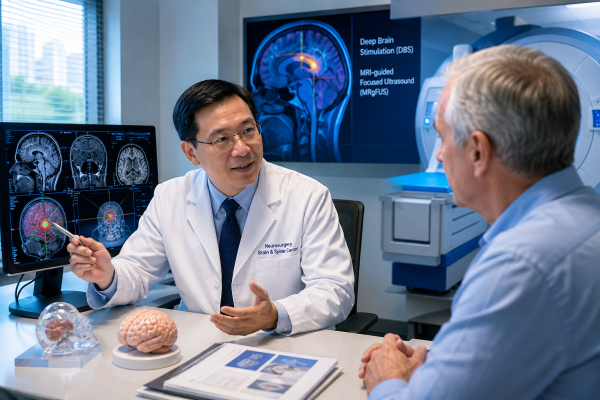
Functional neurosurgery in China is providing new treatment options for patients living with Parkinson’s disease, essential tremor, dystonia and drug-resistant epilepsy through advanced procedures such as Deep Brain Stimulation (DBS) and MRI-guided Focused Ultrasound (MRgFUS).
China has become an important destination for specialist neurological care, with selected hospitals offering Functional Neurosurgery through technologies including Deep Brain Stimulation (DBS) and MRI-guided Focused Ultrasound (MRgFUS). These treatments focus on restoring normal brain function by targeting specific neural pathways responsible for abnormal movement or neurological activity.
Medical Tourism Vietnam provides independent educational information to help international patients better understand these advanced treatment options and discuss them with appropriately qualified medical specialists.
What Is Functional Neurosurgery?
Functional neurosurgery is a specialised branch of neurosurgery that aims to improve neurological function rather than remove diseased tissue. Using advanced imaging, computer-guided planning and highly precise surgical techniques, specialists target specific areas of the brain responsible for abnormal electrical activity or movement disorders.
Unlike traditional neurosurgery, many modern functional procedures are designed to minimise disruption to surrounding healthy brain tissue while improving symptom control and quality of life.
Every patient undergoes a detailed neurological assessment before any treatment recommendation is made.
Deep Brain Stimulation (DBS)
Deep Brain Stimulation is one of the most established treatments for selected movement disorders.
During the procedure, neurosurgeons implant extremely fine electrodes into carefully identified areas of the brain. These electrodes connect to a small programmable neurostimulator placed beneath the skin, usually below the collarbone.
The device delivers controlled electrical impulses that help regulate abnormal neural activity without destroying brain tissue.
For carefully selected patients, DBS may help improve:
- Tremor
- Muscle stiffness (rigidity)
- Slowness of movement (bradykinesia)
- Motor fluctuations
- Certain forms of dystonia
One advantage of DBS is that stimulation settings can be adjusted over time as a patient’s condition changes.
MRI-guided Focused Ultrasound (MRgFUS)
MRI-guided Focused Ultrasound represents one of the newest developments in functional neurosurgery.
Rather than requiring an incision, hundreds of ultrasound beams are directed towards a precise target deep within the brain while MRI provides continuous real-time guidance.
The focused energy creates a highly localised therapeutic effect while minimising impact on surrounding healthy tissue.
Potential advantages include:
- No surgical incision
- No implanted device
- Shorter recovery time for suitable patients
- High treatment precision
Not every neurological condition is suitable for MRgFUS, and patient selection remains an essential part of treatment planning.
Conditions Commonly Evaluated
Functional neurosurgery may be considered for carefully selected patients with conditions including:
- Parkinson’s disease
- Essential tremor
- Dystonia
- Drug-resistant epilepsy
- Selected neurological movement disorders
Suitability depends upon neurological examination, imaging studies, previous treatment history and multidisciplinary specialist assessment.
The Importance of Multidisciplinary Care
Successful neurological treatment extends beyond the procedure itself.
Patients are commonly evaluated by multidisciplinary teams that may include:
- Neurologists
- Functional neurosurgeons
- Neuroradiologists
- Anaesthetists
- Rehabilitation specialists
- Specialist nursing staff
This collaborative approach helps ensure treatment recommendations are tailored to each patient’s medical condition and long-term goals.
International Patient Pathway
International patients typically undergo a structured assessment before travelling.
Depending on the treating hospital, this process may include:
- Medical record review
- MRI and diagnostic imaging assessment
- Online specialist consultation
- Treatment planning
- Travel coordination
- Hospital admission
- Rehabilitation planning
- Long-term follow-up
Why Choose Functional Neurosurgery in China?
Functional neurosurgery in China continues to evolve through investment in specialist neuroscience centres, advanced imaging technology and multidisciplinary clinical expertise.
For international patients, these services may provide access to:
- Advanced neurosurgical technology
- Specialist multidisciplinary assessment
- Comprehensive neurological care
- Coordinated treatment planning
- International patient support services
Every patient’s circumstances are unique, and treatment decisions should always be made following comprehensive consultation with appropriately qualified medical specialists.
GoBroad Healthcare Group
Medical Tourism Vietnam has been advised that GoBroad Healthcare Group has expanded its specialist neurological services to include Functional Neurosurgery programs incorporating both Deep Brain Stimulation (DBS) and MRI-guided Focused Ultrasound (MRgFUS).
These services include remote case evaluation, specialist consultation, precision treatment planning and long-term follow-up support for eligible international patients.
Related Reading
New Frontiers in Brain Surgery: How China Is Expanding Precision Neurosurgical Care
Read our companion editorial feature on Hanoi Trading Post, exploring the rapid evolution of functional neurosurgery and emerging treatment technologies across Asia.
Medical Disclaimer
This page is provided for educational purposes only and should not be considered medical advice. Treatment recommendations vary according to each patient’s individual medical history, diagnostic findings and specialist assessment. Patients should always consult appropriately qualified healthcare professionals before making decisions regarding medical treatment.
About the Author
George Adams is the founder and editor of Medical Tourism Vietnam and Hanoi Trading Post. With decades of professional experience across Asia, he writes extensively on healthcare, medical tourism, education and regional development, helping international readers better understand complex healthcare systems and emerging medical technologies.
Editorial Policy
Medical Tourism Vietnam publishes independent educational information designed to help international patients make informed healthcare decisions. Our content is evidence-informed, patient-focused and regularly reviewed for accuracy.