




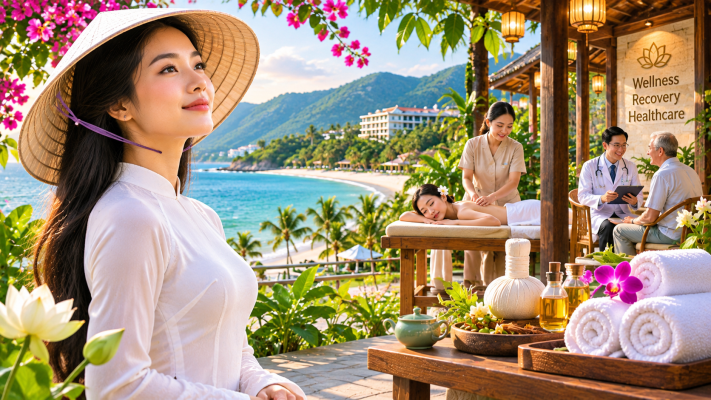
Vietnam’s expanding wellness tourism industry offers new opportunities for healthcare providers, hotels and international visitors. But the relationship between wellness travel and medical treatment must be built on professional standards, patient safety and continuity of care.
Vietnam’s Changing Wellness Tourism Landscape
Vietnam has long attracted international visitors through its cultural heritage, natural landscapes, cuisine and hospitality.
Today, another dimension of the country’s tourism industry is gaining attention: wellness travel.
Hotels and resorts are increasingly offering experiences that extend beyond conventional accommodation and leisure. These include hydrotherapy, thermal bathing, meditation, fitness programmes, traditional wellness practices and longer retreats.
At the same time, international interest in beauty-related travel and preventive healthcare is creating opportunities for destinations able to offer both hospitality and appropriately regulated medical services.
For Medical Tourism Vietnam, established in 2011, this development raises an important question:
How can Vietnam connect its growing wellness tourism industry with professional healthcare while maintaining patient safety, transparency and continuity of care?
The answer requires more than attractive resorts and competitive treatment prices.
It requires an approach that recognises the different needs of wellness travellers and medical patients.
Vietnam’s Wellness Tourism Market: A Growing Opportunity
A television report examining Vietnam’s wellness tourism industry highlighted how hotels and resorts are expanding their wellness offerings.
The report featured specialised facilities and experiences, including thermal treatment rooms, hydrotherapy, meditation and structured wellness retreats.
It also cited research by IMARC Group estimating Vietnam’s wellness tourism market at approximately US$5.5 billion in 2025, with a projected value of US$11.9 billion by 2034.
The reported compound annual growth rate was 8.74% for 2026–2034.
These figures represent market estimates and forecasts, not guaranteed future outcomes.
Nevertheless, they illustrate growing commercial interest in wellness-oriented travel.
The Global Wellness Institute also provides international research on wellness tourism and the broader wellness economy, offering useful context for understanding the industry’s development.
For Vietnam, the opportunity extends beyond traditional spa resorts.
It may also benefit healthcare providers, accommodation businesses, traditional wellness practitioners, transport services and organisations assisting international visitors.
The Rise of the Glowcation
An emerging travel concept known as the glowcation is attracting international media attention.
In August 2026, the South China Morning Post explored six destinations associated with beauty and wellness travel.
A glowcation generally describes a holiday organised around personal wellbeing, beauty experiences, relaxation or rejuvenation.
Activities may include skincare consultations, spa programmes, traditional bathing, meditation, fitness or other wellness services.
However, an important distinction must be maintained.
A glowcation is a travel concept, not a medical treatment.
A relaxing spa experience and an invasive cosmetic procedure involve very different levels of clinical responsibility.
Medical procedures require qualified practitioners, appropriate facilities, informed consent, assessment of potential risks and suitable follow-up arrangements.
The distinction becomes particularly important when patients travel internationally.
For a broader discussion of this developing travel trend, see The Rise of Wellness Tourism and Glowcations in Asia in Hanoi Trading Post.
Where Wellness Tourism and Medical Tourism Meet
Wellness tourism generally focuses on relaxation, lifestyle experiences and activities intended to support personal wellbeing.
Medical tourism involves travelling to obtain professional healthcare.
International patients may seek dental treatment, ophthalmology, fertility services, aesthetic surgery, specialist consultations or other medical procedures.
Although wellness travellers and medical patients may use the same hotels, transport services and destinations, their needs are not necessarily the same.
A wellness visitor may select a resort because of its peaceful environment, recreational facilities or cultural activities.
A medical patient must first consider the suitability of the treating healthcare provider, the proposed procedure, the risks involved and the arrangements for follow-up care.
Accommodation and travel arrangements should support those clinical requirements.
They should never determine the patient’s medical treatment plan.
Vietnam’s Healthcare Opportunity
Vietnam has developed healthcare services that attract interest from both domestic and international patients.
These include dentistry, ophthalmology, fertility treatment, aesthetic medicine and selected specialist medical services.
However, the suitability of any provider depends on the patient’s individual needs, the qualifications of the treating professionals and the capabilities of the facility.
For international visitors, important considerations include:
- Professional qualifications and relevant specialist experience.
- Hospital or clinic licensing and appropriate facilities.
- Clear information about treatment options and risks.
- Transparent quotations and payment arrangements.
- Anaesthesia and emergency arrangements where applicable.
- Postoperative monitoring and follow-up care.
- Communication with healthcare professionals after returning home.
At Medical Tourism Vietnam, our role is to provide information and assist patients with enquiries and introductions to independent healthcare providers.
We do not diagnose medical conditions, prescribe treatment or guarantee clinical outcomes.
Our approach is to encourage informed decisions and appropriate professional assessment before patients commit to treatment or travel.
The Importance of Recovery Accommodation
One of the most promising areas of cooperation between Vietnam’s hospitality and healthcare sectors is accommodation for international patients.
Medical travellers may need to remain in Vietnam for a period after treatment.
The appropriate duration depends on the procedure, the patient’s condition, the treating clinician’s advice and the availability of suitable follow-up care.
For some patients, convenient accommodation near a hospital may be more important than access to recreational facilities.
Others may require accessible rooms, suitable meals, assistance with transport or accommodation for an accompanying family member.
Hotels and serviced apartments can potentially support these needs.
However, accommodation described as suitable for recovery should not be confused with a licensed medical facility.
A resort cannot replace clinical supervision, wound care, emergency services or specialist follow-up when these are required.
Similarly, spa treatments, massage, sauna sessions and thermal bathing may be inappropriate during recovery from certain procedures.
Patients should obtain clearance from their treating healthcare professional before undertaking such activities.
Medical recovery should be planned around clinical requirements, not holiday schedules.
Vietnam’s Destinations and Extended-Stay Opportunities
Vietnam offers a wide variety of destinations that may appeal to wellness travellers and international visitors.
Hà Nội combines cultural heritage, established urban services and access to healthcare facilities.
Đà Nẵng offers coastal accommodation, modern infrastructure and convenient access to central Vietnam.
Hội An is recognised for its historic atmosphere, traditional architecture and hospitality.
Nha Trang and Phú Quốc offer coastal environments and resort accommodation.
Đà Lạt provides a highland setting, while Sa Pa offers mountain landscapes and cultural experiences.
Each destination has different advantages.
For medical patients, however, the availability and location of appropriate healthcare services must remain the primary consideration.
A scenic destination is not necessarily the most suitable location for recovery following surgery or specialist treatment.
Traditional Medicine and Wellness Practices
Vietnam’s traditional medicine heritage is another important element of the country’s wellness landscape.
Traditional herbal practices, acupuncture, massage and other culturally established approaches continue to attract interest.
Across the wider Asian region, traditional medicine systems also form part of the cultural identity of destinations such as China, Japan, Thailand and India.
These traditions deserve respectful and informed presentation.
Nevertheless, historical use does not necessarily establish clinical effectiveness or safety.
Some herbal products may interact with prescription medicines. Certain treatments may be unsuitable for patients with existing medical conditions or those recovering from surgery.
International visitors should therefore distinguish between cultural wellness experiences and treatments intended to address medical conditions.
Where a clinical claim is made, appropriate evidence, practitioner qualifications and safety information should be available.
This is particularly important when traditional practices are promoted alongside modern medical services.
Specialist Healthcare and the Wider Asian Market
Vietnam’s developing wellness sector is part of a broader regional landscape.
Across Asia, countries offer different combinations of hospitality, traditional wellness experiences and specialist healthcare.
China, for example, has developed advanced capabilities in areas including precision oncology, cellular therapies, diagnostic testing and functional neurosurgery.
Other regional destinations provide services in areas such as cardiology, orthopaedics, fertility treatment, aesthetic medicine and rehabilitation.
These services should not be promoted as ordinary wellness holidays.
Patients considering advanced or complex treatments require careful specialist assessment, reliable clinical information and continuity of care.
Some emerging treatments may remain investigational or have restricted indications.
Medical Tourism Vietnam supports informed patient enquiries while recognising that clinical decisions must remain with appropriately qualified healthcare professionals.
Glowcations Asia: Connecting Wellness, Healthcare and Travel
The changing relationship between wellness and healthcare also provides the foundation for Glowcations Asia.
Glowcations Asia is a regional information and facilitation platform exploring wellness, beauty, traditional medicine, healthcare, recovery accommodation and extended-stay travel across selected Asian destinations.
Its broader regional focus complements the established work of Medical Tourism Vietnam.
Both websites are operated by MEDICAL TOURISM VIETNAM LIMITED, incorporated in Hong Kong in May 2026.
While Glowcations Asia explores the wider relationship between wellness and healthcare travel, Medical Tourism Vietnam maintains its particular focus on professional medical services, patient information and international healthcare enquiries.
The distinction is intentional.
Visitors seeking a wellness experience have different needs from patients considering surgery, fertility treatment or advanced specialist care.
Our objective is to help visitors understand these differences and make informed enquiries.
Building Trust in Vietnam’s Wellness and Medical Tourism Industries
Vietnam’s expanding wellness market offers commercial opportunities for healthcare providers, hospitality businesses and tourism operators.
However, lasting international recognition requires more than market growth.
Healthcare providers must demonstrate appropriate professional qualifications, licensing and clinical capabilities.
Wellness operators should describe their services accurately and avoid unsupported health claims.
Accommodation providers should distinguish ordinary hospitality services from facilities and arrangements suitable for medical recovery.
Commercial relationships and referral arrangements should be transparent.
For international patients, accurate information and reliable follow-up arrangements are essential.
A patient-first approach does not prevent responsible commercial development.
Rather, it provides the foundation for sustainable relationships between patients, healthcare providers and supporting businesses.
Looking Ahead
Vietnam has considerable potential to strengthen its position within Asia’s wellness and healthcare travel industries.
Its cultural heritage, hospitality infrastructure, natural environments and developing healthcare services provide opportunities for different types of international visitor.
The emergence of glowcations and longer-stay wellness experiences may encourage new partnerships between hotels, healthcare providers and travel organisations.
But the success of these initiatives will depend on maintaining clear distinctions between leisure, wellness and medical treatment.
Wellness tourism may enhance a visitor’s experience. Medical tourism must always begin with patient safety, professional healthcare and continuity of care.
That principle remains central to the work of Medical Tourism Vietnam.
International Patient Enquiries
If you are considering medical treatment in Vietnam, we encourage you to obtain appropriate professional advice and understand your options before making travel arrangements.
Medical Tourism Vietnam can assist with initial enquiries and introductions to independent healthcare providers.
For more information, please visit our Medical Treatment in Vietnam — Patient Guide or Contact Us.
Editorial and Medical Disclaimer
This article is provided for general educational and informational purposes. It does not constitute medical advice, diagnosis or treatment recommendations.
Medical Tourism Vietnam does not directly provide medical treatment or guarantee treatment outcomes. Patients should consult appropriately qualified healthcare professionals before making medical decisions.
Medical Tourism Vietnam may have commercial referral relationships with participating providers. Such relationships do not replace independent assessment of professional qualifications, clinical suitability or patient safety.
Further Reading
- Hanoi Trading Post — The Rise of Wellness Tourism and Glowcations in Asia
- Glowcations Asia — Regional Wellness and Healthcare Travel
- Global Wellness Institute
- South China Morning Post — Six Glowcation Destinations
- Vietnam Wellness Tourism — Television Report
