




Medical Tourism Vietnam | China Healthcare News | November 2026
GoBroad Healthcare Group (GHG) has reported developments in personalised cancer treatment, CAR-T cell therapy, specialist neuro-oncology and international medical research in its latest newsletter, covering 26 October to 14 November 2026.
The updates highlight China’s expanding involvement in advanced oncology research and the growing importance of multidisciplinary care for patients with complex, recurrent or treatment-resistant cancers.
For international patients considering further specialist assessment in China, these developments provide useful information about emerging treatment approaches, diagnostic technologies and clinical research opportunities.
Personalised Cancer Treatment and Multidisciplinary Care
GoBroad describes an integrated approach to solid tumour treatment that combines precision diagnostics, multidisciplinary team (MDT) assessment and individually selected therapies.
According to the group, its treatment capabilities include:
- Molecular testing and pathology review to support treatment decisions.
- Targeted medicines and antibody-drug conjugates (ADCs).
- Cellular therapies, including CAR-T, natural killer (NK) cell approaches and tumour-infiltrating lymphocyte (TIL) therapy.
- Interventional procedures, including ablation and embolisation.
- Proton therapy and other radiotherapy approaches.
- Tumour organoid drug-sensitivity testing to provide additional laboratory evidence that may inform treatment planning.
These approaches may be considered for selected patients with gastrointestinal, lung, breast, gynaecological, urological and other solid tumours.
However, not every treatment is established or appropriate for every cancer. Some approaches remain investigational, and availability depends on the treating institution, clinical indications and patient eligibility.
Related reading: Tumour Organoid Drug-Sensitivity Testing in China.
CAR-T Therapy and Complex Blood Disorders
GoBroad reports cumulative experience involving more than 6,000 CAR-T treatments and 4,000 haematopoietic stem cell transplants.
These figures are reported by GoBroad and should not be interpreted as independently verified treatment outcomes or success rates.
The group’s haematology services address complex blood disorders, including leukaemia, lymphoma, multiple myeloma, myelodysplastic disorders and selected immune-related conditions.
Its programme combines specialist diagnostic assessment, CAR-T cell therapy, stem cell transplantation and individually considered combination treatment strategies.
CAR-T therapy has become an important treatment option for certain blood cancers, particularly in selected patients with relapsed or refractory disease. Nevertheless, eligibility, potential complications and expected benefits require detailed specialist evaluation.
For patients who have already received multiple treatments, a comprehensive review of their medical history and previous treatment responses may help determine whether further options are appropriate.
Specialist Assessment for Complex Brain Tumours
A significant feature of the November newsletter is GoBroad’s specialist neuro-oncology programme, led by Professor Wenbin Li.
The programme focuses on patients with complex, recurrent or progressive nervous system tumours, including gliomas, glioblastoma, meningiomas, medulloblastoma, brain metastases and selected other conditions.
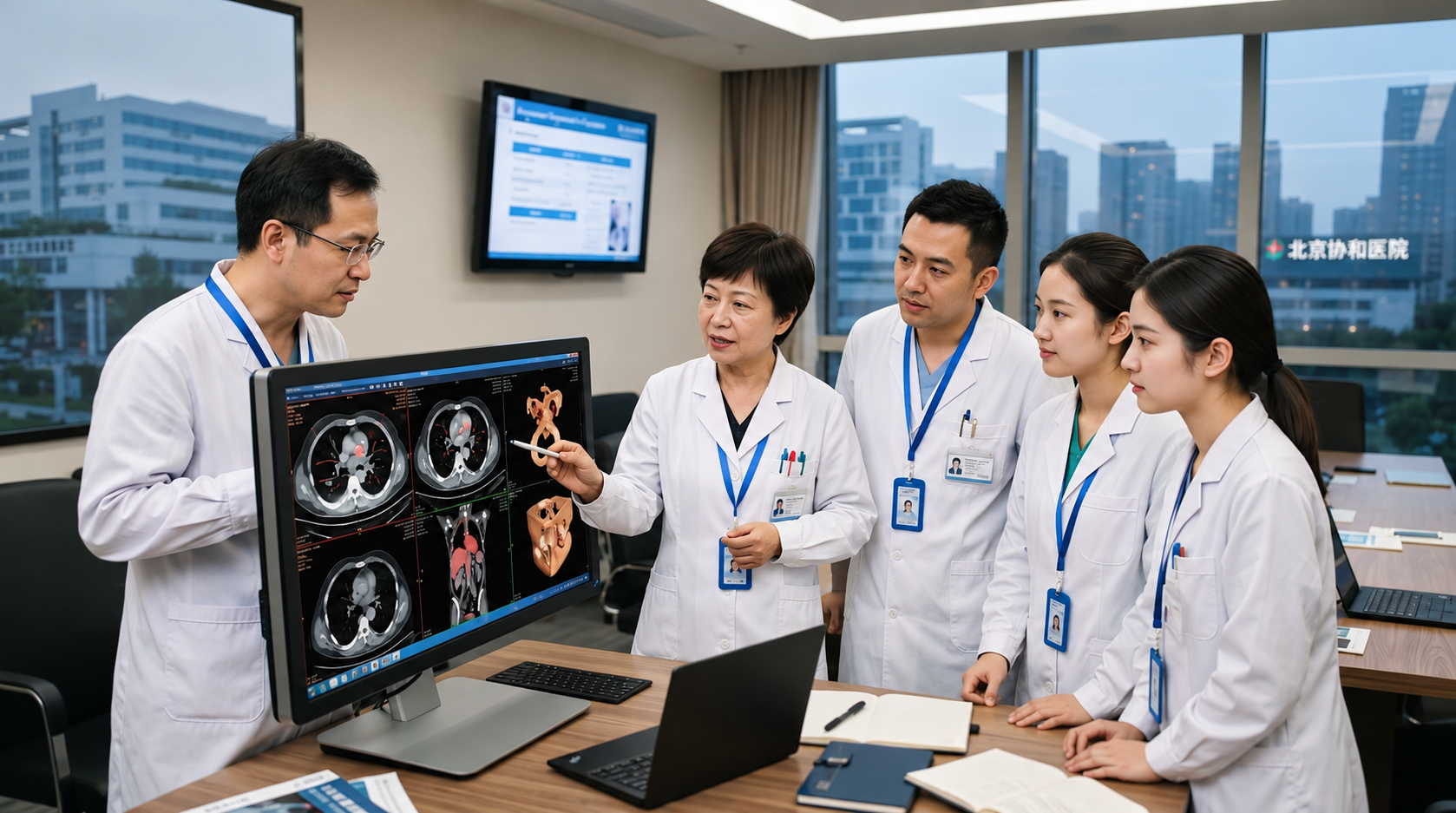
GoBroad reports that its multidisciplinary team reviews MRI imaging, pathology, molecular findings and previous treatments to assess possible next steps.
The programme also discusses research involving targeted therapies, oncolytic viruses and tumour-infiltrating lymphocyte therapy.
These research approaches should not be confused with routinely available or proven treatments for all brain tumour patients.
An important aspect of neuro-oncology is balancing disease management with neurological function, cognition, mobility and quality of life.
International Oncology Research: ESMO, SIOP and ACR 2026
GoBroad also reports participation in several major international medical conferences.
ESMO 2026: GoBroad and collaborating expert teams presented 38 studies addressing developments across multiple cancer types.
SIOP 2026: Three studies from Professor Yonghong Zhang’s team focused on paediatric lymphoma research.
ACR 2026: Six selected studies explored CAR-T therapy approaches for autoimmune diseases.
These announcements demonstrate research activity but do not, by themselves, establish clinical effectiveness, regulatory approval or routine patient access.
Patients should seek specialist advice about whether a particular treatment is established, available through an authorised clinical programme or accessible only through a clinical trial.
Precision Diagnostics and Monitoring
The newsletter also highlights developments in laboratory medicine.
GoBroad reports that a newly identified human leukocyte antigen (HLA) allele discovered by its team received an official World Health Organization designation.
Separately, Dr Yajing Zhang’s team published a review examining blood-based mass spectrometry for monitoring multiple myeloma.
Advances in diagnostics and monitoring can contribute to more informed clinical decisions, although the usefulness of individual technologies depends on their validation and clinical application.
International Research Cooperation
GoBroad announced the launch of its Global ARO Alliance, intended to strengthen collaboration between institutions and researchers involved in oncology clinical research.
The group also reported professional exchanges with delegations from Argentina and the National Academy of Sciences of Belarus.
International research cooperation may support scientific exchange and future clinical development, although announcements of partnerships should not be interpreted as evidence of improved patient outcomes.
What These Developments Mean for International Patients
For patients considering specialist cancer care in China, the most important question is not simply whether a hospital offers an advanced technology.
It is whether that technology is appropriate for the patient’s diagnosis, previous treatment history, current health and individual circumstances.
Before pursuing further treatment overseas, patients should seek clarification about:
- The diagnosis and supporting pathology or molecular findings.
- The purpose and evidence supporting any proposed treatment.
- Whether the treatment is established or investigational.
- Expected benefits, risks and possible complications.
- Total estimated treatment costs and likely length of stay.
- Follow-up arrangements and communication with their existing medical team.
International patients may also require an initial remote case review before deciding whether travelling to China is appropriate.
Medical Tourism Vietnam: Supporting Informed Patient Decisions
Established in 2011, Medical Tourism Vietnam provides information and assistance to international patients exploring healthcare options in Vietnam and selected specialist medical programmes in China.
Our approach emphasises patient choice, transparent information, appropriate clinical assessment and continuity of care.
We do not diagnose medical conditions or recommend a particular treatment without specialist assessment.
Patients considering further evaluation in China can explore our Advanced Treatment Options in China guide or contact Medical Tourism Vietnam to discuss the information required for an initial provider enquiry.
Further information about GoBroad Healthcare Group is available through its official website.
Editorial note: This article is based on information supplied by GoBroad Healthcare Group in its newsletter dated 26 October–14 November 2026. Reported clinical experience, research activities and treatment capabilities are attributed to the provider. Inclusion does not constitute independent verification, endorsement or a guarantee of treatment availability or outcomes. Clinical decisions must be made by appropriately qualified healthcare professionals.
Source: GoBroad Healthcare Group, GHG’s Newsletter, 26 October–14 November 2026.
